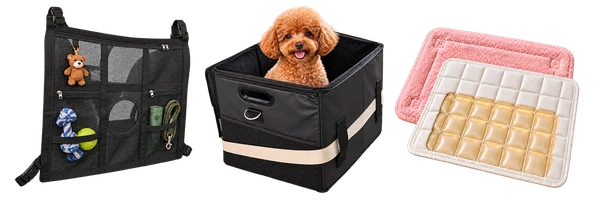

A pet car window cushion that recently attracted attention and discussion on social media began with one specific observation: many dogs enjoy looking out the window during car rides, but the hard edge of the door provides little support for their heads. The designer responded by creating a padded cushion that attaches near the window and gives dogs a softer surface to lean against.
Nearly every video featuring this product has attracted thousands—or even hundreds of thousands—of views and sparked widespread discussion. While this attention does not directly guarantee sales, it shows that consumers are strongly drawn to designs inspired by real pet behavior and focused on solving a specific, easily recognizable problem.
For pet brands, this offers an important lesson: product opportunities in long-distance car travel do not come only from adding more features. They often begin with close observation of how dogs behave and how owners use products. Brands should first identify the inconvenience within a specific scenario and then use dimensions, support, anti-slip features, attachment methods, temperature management, cleaning, and portability to turn that insight into a product value consumers can easily understand.
Start With Pet Behavior, Not a Feature List
The window cushion attracted attention not simply because it used padding, but because it addressed a situation consumers could immediately recognize: dogs like looking out the window, but they do not have a suitable surface on which to rest their heads.
This is a useful approach for pet businesses developing automotive pet products. Instead of beginning with the question, “What features should we add?” pet businesses can first observe what dogs do during long car rides—standing, turning, lying down, looking toward the window, entering and exiting the vehicle, or searching for a cooler or warmer place.
These behaviors can help pet businesses identify more specific product problems:
- Why does the dog keep changing positions?
- Why does the mat move while the vehicle is in motion?
- Which parts of the dog’s body lack support?
- Which vehicle areas retain heat or expose the dog to cold surfaces?
- Which parts of the vehicle are most likely to become dirty or scratched when the dog enters and exits?
- After use, is hair removal, mud cleanup, or drying the most difficult task for the owner?
Once the problem is specific enough, material, dimension, and structural decisions become easier to define. The following sections examine some of the most common behaviors and product issues that can appear during car travel.
Problem 1: An Unstable Resting Surface Makes It Difficult for Dogs to Settle
During a long drive, a dog may repeatedly sit, stand, turn around, and lie down. When the vehicle accelerates, brakes, or turns, an ordinary blanket or unsecured pet mat can slide, bunch up, or move away from the intended resting area.
This problem is not usually caused by the product being insufficiently soft. It often occurs because the backing, dimensions, and attachment structure were not designed for a vehicle environment. A mat that is too small can restrict the dog’s ability to change positions, while insufficient friction allows the product to move. Poorly positioned buckles or hardware may also create raised areas underneath the dog.
Potential product directions include:
- A portable pet mat with anti-slip backing
- An appropriately padded resting surface
- Seat anchors or securing straps
- Dimensions suitable for different dog sizes
- A foldable and portable structure
Brands need to balance cushioning with portability. Additional padding can improve surface support, but it also increases product weight, folded volume, washing difficulty, and drying time.
Samples should not be evaluated only on a table. Pet businesses should install the product on a rear seat or in a cargo area and test how it performs when weight is applied to different points, as well as after repeated movement, folding, washing, and reinstallation.
Problem 2: Insufficient Coverage Leaves Vehicle Interiors Exposed
Long car rides increase the amount of time a pet spends moving around the rear seat or cargo area. Hair, mud, saliva, spilled water, and scratches may affect seat cushions, backrests, side areas, and loading surfaces.
If a cover is too small or poorly secured, the dog’s movement may cause it to shift and expose areas that were originally protected. Even when the main fabric is waterproof, moisture may still reach the upholstery through stitching, edges, openings, or detachable connection points.
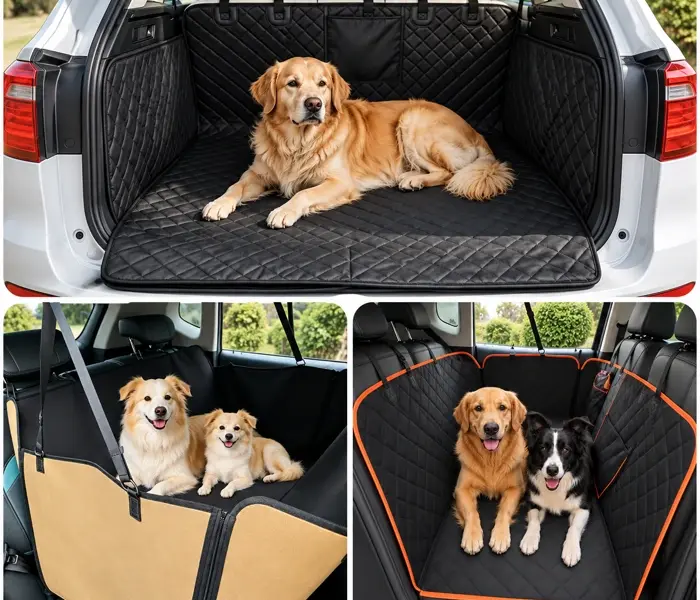
Waterproof fabric is therefore only one part of a complete protective structure. pet businesses should select the product configuration according to the intended installation area:
- Standard rear-seat cover
- Hammock-style seat cover
- Detachable or convertible cover
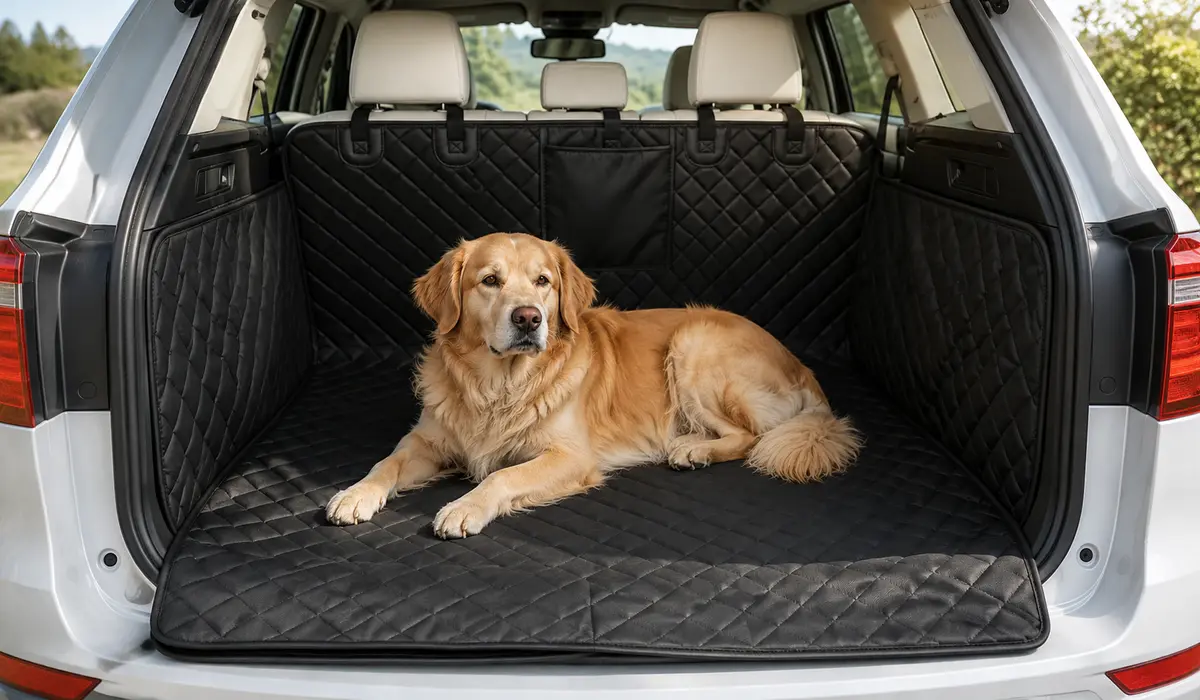
- suv cargo liner
- Cargo liner with an extended loading flap
These products should not be differentiated only by appearance or price. A standard model provides basic rear-seat protection. A hammock-style cover expands the protected area. A detachable structure supports consumers who need to share the rear seat between passengers and pets. A cargo liner must protect the floor, side panels, rear seatbacks, and loading edge.
Brands should examine the product’s installed coverage rather than relying only on its flat dimensions. Headrest straps, seat anchors, seat belt openings, side-panel height, and loading flaps should all be evaluated in representative vehicles.
Retail packaging and e-commerce listings should also show the installation position and coverage of each structure. The easier it is for consumers to understand where each product should be used, the easier it is for pet businesses to reduce returns caused by misunderstanding the size or intended application.
Problem 3: Summer Heat Causes Dogs to Change Positions Frequently
During long drives, dogs remain in contact with the same resting surface for extended periods. A thick mat made with dense filling or poorly ventilated fabrics may retain heat and cause the dog to change positions frequently.
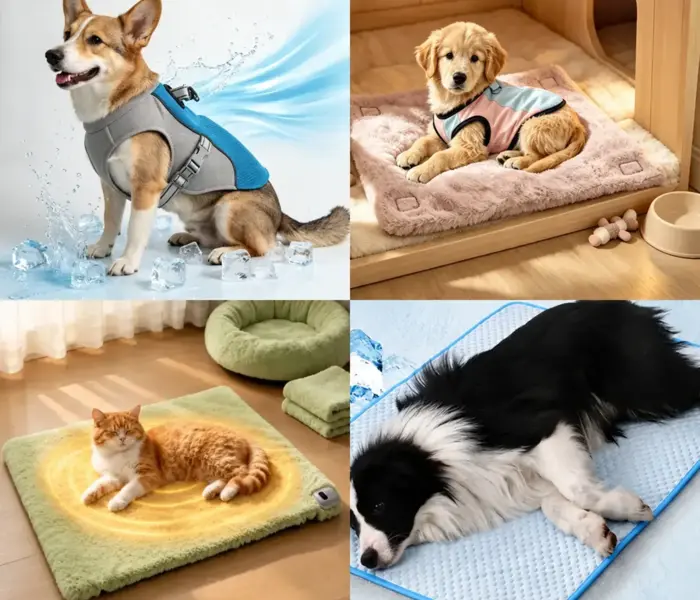
This behavior can lead to seasonal product-development opportunities, but “cooling” should not be treated only as a marketing label. Brands need to determine whether the cooling effect comes from the surface fabric, breathable construction, or internal gel, and how that structure affects weight, folding, cleaning, and transportation.
Cooling-fabric pet mats are generally lighter and easier to fold. Gel-based products may offer a different surface experience, but their internal sealing, performance under repeated pressure, total weight, and stability during transportation require closer evaluation.
Brands should confirm:
- The product’s cooling mechanism
- The function of the surface and internal materials
- Finished thickness, weight, and folded dimensions
- Performance after repeated pressure and folding
- Cleaning, drying, and storage requirements
- Whether temperature or cooling-duration claims are supported by applicable testing
A cooling mat should be positioned as a supplemental summer resting surface. It does not replace vehicle ventilation, drinking water, shade, reasonable rest stops, or appropriate supervision. Clearly defining these limitations can prevent consumers from developing unrealistic expectations about product performance.
Expand a Single Product Idea Into a Range With Clear Roles
The window cushion demonstrates how one specific behavior can inspire a differentiated product idea. For a brand, however, one idea should serve a defined role within the range rather than attempt to address every pet car travel need.
Pet car seat covers, cargo liners, portable pet mats, window support cushions, cooling mats, and warming mats solve different problems:
| Product | Product Role | Main Problem Addressed |
|---|---|---|
| Pet Car Seat Cover | Rear-seat protection | Hair, mud, moisture, and scratches |
| Pet Car Cargo Liner | SUV cargo protection | Dirt across floors, side panels, and loading areas |
| Portable Pet Mat | Stable resting surface | No consistent and familiar place for dogs to sit or lie down |
| Window Support Cushion | Localized resting support | No soft surface for dogs resting near the window |
| Pet Cooling Mat | Summer resting surface | Heat retention in ordinary pet mats |
Pet brands can begin with one core vehicle-protection product and one portable resting product, then add seasonal items or differentiated accessories according to their target market.
Products can share colors, quilting patterns, edge binding, logos, labels, and packaging to create a coordinated collection. However, every SKU should address a scenario and problem that consumers can easily understand.
What Should Brands Confirm Before Product Development?
A product idea that attracts attention is not necessarily ready for manufacturing. Before a supplier can evaluate development feasibility, the pet businesses needs to define the intended use conditions.
Pet businesses should first confirm:
- Target dog size and weight range
- Vehicle type and installation area
- The dog’s expected behavior in that position
- Expected trip duration
- Seasonal and environmental conditions
- Availability of a compatible power source
- Consumer cleaning expectations
- Target folded dimensions
- Target retail price
- Sales channel
- Packaging format
- Required marketing claims and supporting test information
These details can then guide decisions about product dimensions, surface materials, waterproof construction, anti-slip backing, padding thickness, attachment methods, temperature-control structures, packaging, and labels.
Sample testing should also reflect realistic use. Depending on the product, testing may include vehicle installation, possible interference with vehicle functions, repeated pressure, movement, folding, hair removal, water exposure, washing, drying, temperature performance, and repacking.
Localized Support Can Inspire Product Ideas, but Usage Boundaries Must Be Verified
The window cushion demonstrates that a dog’s comfort needs may extend beyond a full-size pet mat. During a long car ride, the head, neck, or side of the body may lack an appropriate resting surface, creating opportunities for localized support products.
However, a localized support structure requires more scenario testing than an ordinary cushion. For a window-mounted cushion, Pet businesses should confirm:
- How the product attaches to the door or window area
- Whether it may loosen when the vehicle moves or the dog applies pressure
- Whether it interferes with normal window operation
- Whether it obstructs the driver’s view, door locks, or other vehicle functions
- Whether the fabric withstands saliva, paws, and repeated abrasion
- Whether the product can be removed, cleaned, and dried efficiently
- Whether different door structures require different sizes or attachment methods
- Whether the instructions clearly define the intended use
Product messaging should not encourage pets to put their heads outside the window while the vehicle is moving. A more appropriate position is to provide a padded resting surface for dogs that like to remain near the window under suitable in-vehicle conditions.
For pet businesses, this type of product can serve as a differentiated accessory rather than a replacement for a car seat cover or portable pet mat. Its commercial value comes from solving one specific problem, not from combining several difficult-to-explain features.
Conclusion
Whether a pet car travel product is ready for the retail market depends on how well its dimensions, stability, attachment system, vehicle compatibility, temperature management, cleanability, portability, and packaging support the intended use scenario.
Brands should not add features first and search for selling points afterward. Product development should begin by observing how dogs behave during long car rides, identifying the specific problems pet owners encounter, and translating those insights into testable material and structural solutions.
As an OEM/ODM manufacturer, Uwin manufacturer works with pet brands, retailers, importers, distributors, and e-commerce sellers to develop pet car seat covers, SUV cargo liners, portable pet mats, cooling mats, low-voltage heated mats, and PCM heat-storage solutions. Product specifications can be developed around the target dog size, vehicle application, seasonal conditions, sales channel, and packaging requirements.
UWIN Invites You to Discover the Future of Home Goods at the 2025 Spring Canton Fair (Phase II)
Discover the latest in home goods innovation with UWIN at the 2025 Spring Canton Fair (Phase II)! Explore our new materials, designs, and IP-derived product solutions. Find us at Booth 16.3 E31-33 F12-14!
Join Us at the 140th Canton Fair: New Pet Travel, Temperature-Control, and Senior Care Solutions
GUANGZHOU, CHINA — The 140th China Import and Export Fair (Autumn Canton Fair) is approaching....
PVC Foam vs. EVA Foam: Which Material Is Better for Mats?
PVC foam is generally better suited to kitchen mats, doormats, commercial floor mats, and...
How Uwin Manufacturing Helps Brands Develop More Washable and Durable Mats
For brands, retailers, e-commerce sellers, and purchasing teams, post-wash complaints are rarely...
How to Prevent Floor Mats from Slipping on Carpet
Even if a mat stays firmly in place on hard flooring, it may still slide when placed on carpet....
How to Prevent Mats from Slipping and Improve Customer Satisfaction
When a mat shifts forward, curls at the edges, or bunches up on carpet, consumers do not usually...