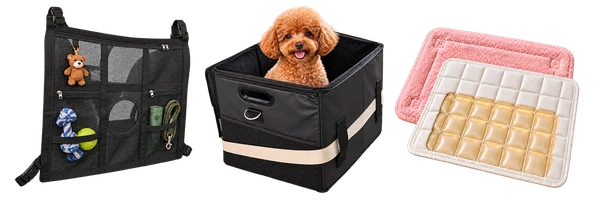

The potential market for pet travel products is substantial. The American Pet Products Association reports that 95 million U.S. households own a pet, including 71 million dog-owning households. In Europe, FEDIAF reports that 140 million households—49% of all households—own at least one pet. These figures indicate a broad customer base for products that help owners transport pets more safely, comfortably, and conveniently.
Travel trends further strengthen this market opportunity. According to Hilton’s 2026 Trends Report, 64% of pet owners prioritize their pets’ needs over their own when booking a trip, while 64% of travelers search for pet-friendly accommodation during the planning process. The same report found that 71% of Americans plan to drive on their next vacation. Together, these findings suggest that pet travel demand extends across road trips, hotel stays, and longer journeys. For pet brands and retailers, developing a coordinated range of car seat covers, portable mats, cooling products, and warming solutions can address different stages of the journey while creating more cross-selling opportunities.

Car Trips: Pet Hair, Mud, and Messes on Car Seats
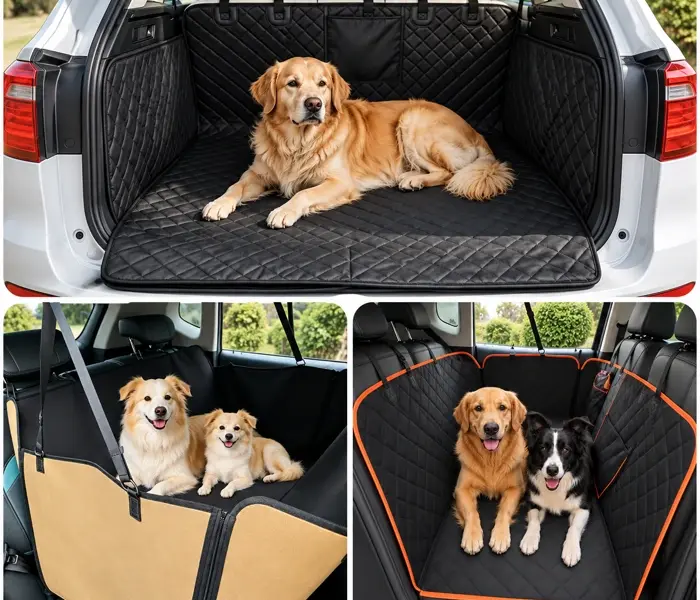
During car trips, pets may shed hair, scratch the upholstery, spill drinking water, or enter the vehicle with wet, muddy paws. These problems become more noticeable after outdoor activities, on rainy days, or when owners transport their pets frequently.
If a seat cover is too small or poorly secured, it may shift when the pet changes position and leave parts of the seat exposed. Even when the main fabric is waterproof, moisture may still reach the upholstery through uncovered edges, stitching, openings, or weak areas in the waterproof layer.
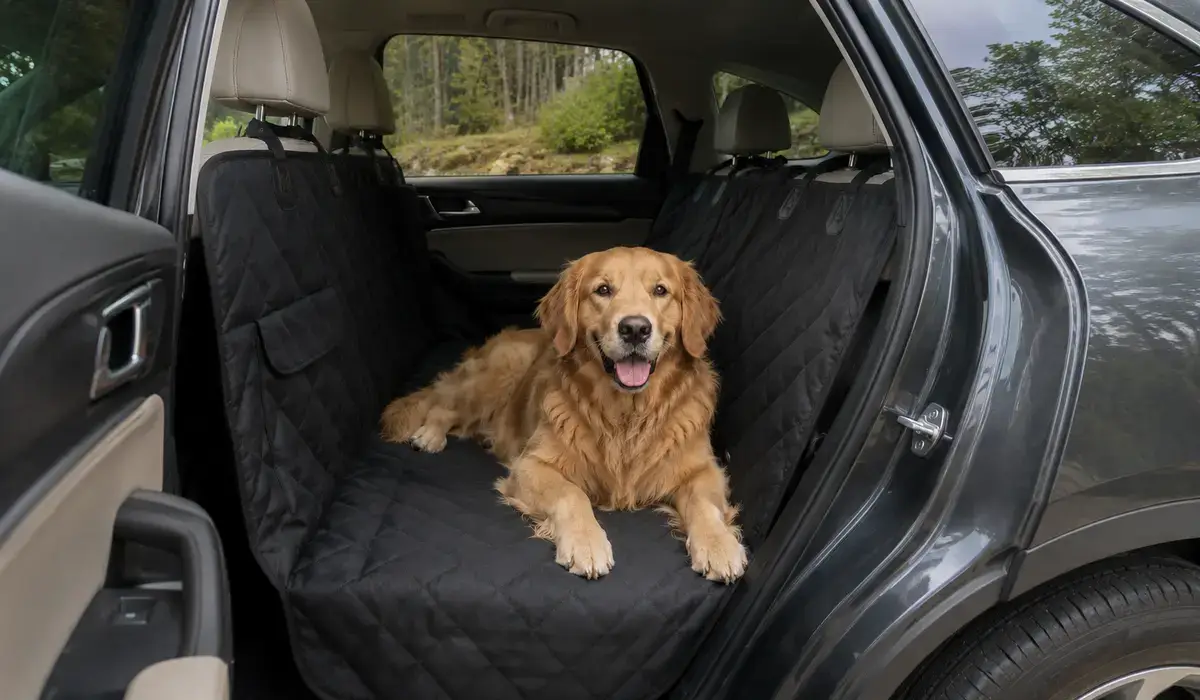
A waterproof pet car seat cover creates a removable barrier between the pet and the vehicle interior. An Oxford fabric surface can withstand frequent contact with paws, while a waterproof backing helps reduce liquid penetration. An anti-slip bottom and adjustable attachment points can also help keep the cover in place.
For consumers, this means less direct contact between the original seat and pet hair, mud, moisture, or scratches. For brands and sellers, more complete coverage and easier cleaning may reduce complaints about shifting, poor fit, or protection that does not match the product images.
pet product businesses should evaluate:
- Coverage after installation, not just the product’s flat dimensions
- Standard, hammock, detachable, and cargo-area configurations
- Surface fabric, waterproof layers, stitching, and edge binding
- Anti-slip backing, seat anchors, straps, and buckles
- Seat belt openings and compatibility with the intended vehicle range
- Removal, cleaning, drying, and reinstallation
- Packaging instructions that clearly explain installation and coverage
The installation area should be defined before product development begins. Rear bench covers, hammock-style covers, and SUV cargo liners require different dimensions, coverage, and attachment structures.
Long Drives: No Stable Place for Pets to Rest
During a long drive, pets may repeatedly sit, stand, turn around, and lie down. A smooth car seat or an unsecured household blanket can move underneath them, making it difficult to maintain a stable resting area.
The problem is not caused by vehicle movement alone. The mat’s backing, dimensions, padding, and securing method all affect how it performs. A mat that is too small may not provide enough usable space, while an overly thick or heavy mat may be difficult to carry and store.
A portable pet mat with an anti-slip bottom can provide a more stable and familiar resting surface. A padded upper layer separates the pet from a hard seat or cargo floor, while a foldable structure makes the mat easier to move between the vehicle and the destination.
For consumers, the value lies in having a recognizable resting space that can be used in the car, at a hotel, or outdoors. For sellers, stability, portability, and multi-location use create a clearer purchasing reason than a general promise of comfort.
pet product businesses should confirm:
- Available dimensions for different pet sizes
- Surface fabric and internal padding structure
- Anti-slip performance on car seats and smooth floors
- Finished product weight and folded dimensions
- Placement of handles or carrying straps
- Cleaning requirements during and after the trip
- Whether hardware creates raised or uncomfortable areas when the mat is open
Sample evaluation should include repeated folding and unfolding. pet product businesses should also check whether the mat maintains its shape and whether the anti-slip backing continues to perform after cleaning.
Hotels and Temporary Stays: Unfamiliar and Unclean Resting Surfaces
Hotels, vacation rentals, campsites, and friends’ homes are unfamiliar environments for pets. Owners may not want their animals lying directly on hotel carpets, hard floors, patios, or surfaces that may have been used by other pets.
An ordinary household blanket does not always solve the problem. It may absorb moisture, collect hair and debris, dry slowly, or take up too much space once it has been used.
A foldable travel pet mat gives owners a defined resting area that can move from the car to the accommodation. A waterproof or moisture-resistant bottom layer helps separate the upper surface from damp or dirty floors, while a washable or wipe-clean surface makes maintenance easier during the trip.
Using the same mat in different locations can also help owners maintain a more consistent resting routine for their pets. For brands, this multi-scenario application allows one product to serve car travel, hotels, camping, crates, patios, and temporary indoor stays.
pet product businesses should evaluate the complete maintenance process, including hair removal, wiping, washing, drying, folding, and storage. If a multilayer structure absorbs water or takes too long to dry, its practical value as a travel product may be lower than the product description suggests.
Retail packaging and e-commerce images should show the mat in multiple environments. This helps consumers understand that the product is not limited to vehicle use.
Summer Travel: Hot Surfaces and Overheating Risks
Summer travel can expose pets to warm vehicle interiors, sun-heated outdoor surfaces, limited shade, and unfamiliar resting areas. Ordinary padded mats may retain heat, particularly when they use thick or poorly ventilated internal layers.
Consumers may therefore look for a portable cooling surface that does not require a continuous power connection. Cooling products should be used together with shade, ventilation, water, and proper supervision rather than presented as replacements for these basic precautions.
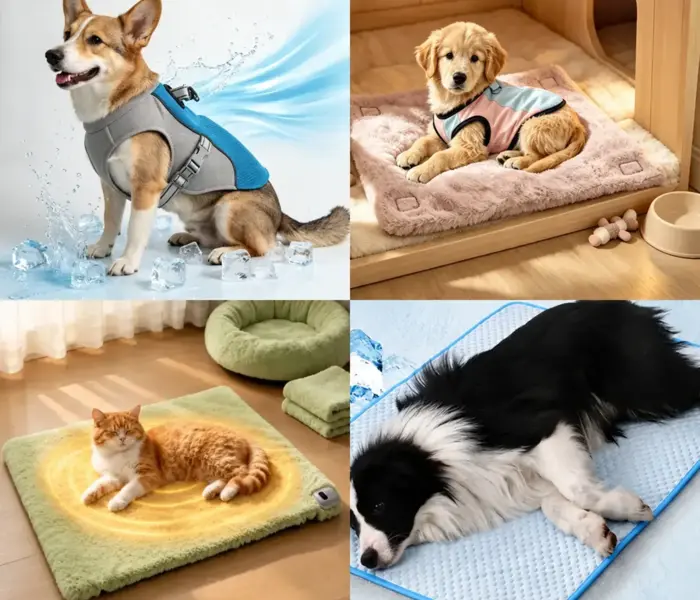
A cord-free pet cooling mat can be placed in a vehicle, crate, hotel room, campsite, or other resting area. Depending on the design, cooling-touch fabrics or portable gel structures can provide a different surface experience from an ordinary textile mat.
A foldable format makes the mat easier to carry between locations, while an easy-clean surface helps owners manage hair, dirt, and moisture during summer trips.
From a B2B product-development perspective, cooling mats create a seasonal sales opportunity. pet product businesses can develop different sizes for cats, small dogs, and larger dogs and customize the surface fabric, color, pattern, logo, and packaging for their intended channel.
pet product businesses should confirm:
- The product’s cooling mechanism and structure
- Surface and internal materials
- Product thickness and finished weight
- Folding and storage requirements
- Cleaning and drying methods
- Performance after repeated pressure and folding
- Appropriate product claims and usage instructions
Any specific cooling temperature or duration claim should be supported by the corresponding product structure and defined test conditions.
Cold-Weather Travel: Cold Resting Areas Without Reliable Warmth
During winter travel, pets may encounter cold SUV cargo areas, outdoor waiting locations, underheated rooms, vacation properties, or drafty resting spaces. Heating an entire vehicle or room may be inefficient or unavailable.
An ordinary padded mat can provide insulation from a cold surface, but it cannot actively generate or store heat. pet product businesses can therefore develop different warming solutions for different environments and price levels.
An insulated pet mat can serve as a basic cold-weather product. A low-voltage heated pet mat can provide active warmth where an appropriate power source is available, while a phase-change material, or PCM, heat-storage mat can provide localized warmth in locations where continuous power is inconvenient.
Uwin can support product development around:
- Cord-free PCM heat-storage pet mats
- Low-voltage heated pet mats
- Insulated pet resting mats
- Portable warming structures
- Rechargeable and heat-storage configurations
Under the relevant operating and testing conditions, a cord-free heat-storage version may provide approximately two to three hours of stored warmth. A low-voltage rechargeable version may provide approximately six hours of warmth after charging.
These durations must be confirmed according to the specific product structure, ambient temperature, mat dimensions, heat-storage material, and test method. They should not be promoted independently of the applicable testing conditions.
For consumers, these products provide targeted warmth where the pet actually rests. For brands and retailers, different warming structures can support entry-level, upgraded, and premium price points without positioning every warming mat as the same product.
pet product businesses should define the intended environment before selecting a structure. Cord-free products may be more suitable for outdoor stops and temporary locations, while low-voltage versions may be better suited to controlled indoor or vehicle environments with access to an appropriate power source.
Electrical specifications, temperature performance, cleaning instructions, internal materials, and applicable testing requirements should be confirmed before marketing claims are finalized.
Moving Between Locations: Bulky Pet Products Are Difficult to Carry
During a single trip, consumers may move a pet product from home to the car, from the car to a hotel, and later from the hotel to an outdoor location. Even a functional product may be left behind if it is too heavy, bulky, or difficult to fold.
Portability depends on more than total weight. Material flexibility, padding thickness, folding lines, handles, carrying straps, and closure methods all affect how easily the product can be carried and stored.
Foldable structures can reduce storage volume, while handles or securing straps can keep a mat closed during transportation. A well-designed multi-purpose product may also reduce the number of separate items the consumer needs to pack.
For pet product businesses, portability affects both the consumer experience and supply-chain costs. A compact product may require less retail shelf space, carton volume, warehouse capacity, and e-commerce fulfillment space.
However, reducing materials or padding simply to create a smaller package may weaken the product’s function. pet product businesses should balance packed dimensions against the intended use, product positioning, and target retail price.
Sample evaluation should include:
- Finished product weight
- Folded dimensions
- Folding and closure methods
- Handle strength and placement
- Product recovery after unpacking
- Retail and shipping package volume
- Performance after repeated folding
- Ease of repacking after use
After the Journey: Hair, Mud, and Stains Are Difficult to Clean
Consumers continue evaluating a pet travel product after the journey ends. Hair, mud, saliva, food residue, spilled water, and accidental messes must still be removed before the product can be stored or used again.
A product described as washable may still be impractical if hair becomes trapped in the surface texture, water remains inside the padding, or the complete mat is too bulky for normal household cleaning.
Waterproof layers can reduce liquid penetration, while wipe-clean surfaces make light dirt easier to remove during a trip. Removable covers can simplify washing, and quick-drying structures can reduce the time before the product is ready to use again.
For consumers, lower maintenance effort may be just as important as comfort during use. For e-commerce sellers, accurate care instructions may reduce complaints caused by incorrect washing, slow drying, or damage to backing and internal layers.
pet product businesses should ask suppliers to confirm:
- Whether the surface is wipe-clean, hand washable, or machine washable
- Whether the cleaning method applies to the complete product or only the surface material
- Whether internal layers absorb or retain water
- How stitching and edge binding perform after repeated cleaning
- Whether the cover or internal insert is removable
- Recommended drying and storage methods
Samples should be tested with realistic amounts of hair, mud, and moisture and subjected to repeated cleaning. Care instructions should be confirmed before labels and packaging are printed.
Different Travel Needs: Build a Coordinated Pet Travel Range
Consumers do not experience every travel problem at the same time. A pet car seat cover protects the vehicle but does not replace an outdoor resting mat. A cooling mat also serves a different seasonal purpose from a heated mat or PCM heat-storage mat.
A coordinated product range allows brands and retailers to address more stages of the journey while giving every SKU a clearly defined role.
| Product | Main Travel Scenario | Consumer Problem Addressed | Key Sourcing Priorities |
|---|---|---|---|
| Pet Car Seat Cover | Daily car trips and short-distance transportation | Pet hair, mud, moisture, and scratches can soil or damage rear seats. | Installed dimensions, waterproof construction, anti-slip backing, attachment straps, and seat belt openings. |
| Pet Car Cargo Liner | SUV travel, camping, and transportation of larger dogs | Pets can soil the cargo floor, side panels, rear seatbacks, and loading edge. | Total coverage, side-panel height, loading flap, fastening structure, and folded volume. |
| Portable Pet Mat | Long drives, hotels, camping, and outdoor stops | Pets lack a familiar and consistent resting area when moving between locations. | Product weight, folded size, padding, carrying handle, and multi-scenario usability. |
| Waterproof Anti-Slip Pet Mat | Hotels, pet crates, and temporary indoor accommodations | Floors may be damp or unfamiliar, while ordinary mats can move and be difficult to clean. | Waterproof coverage, anti-slip backing, edge construction, cleaning method, and drying time. |
| Pet Cooling Mat | Summer road trips, hotels, and outdoor resting areas | Ordinary fabric mats can retain heat in warm conditions. | Cooling mechanism, surface material, internal structure, foldability, and care requirements. |
| Heated Pet Mat | Cold vehicles, indoor spaces, and temporary accommodations with access to power | Ordinary pet mats cannot provide active localized warmth. | Voltage, temperature-control structure, cable design, surface temperature, cleaning method, and applicable test information. |
| PCM Heat-Storage Pet Mat | Outdoor stops, camping, and locations without continuous power | Pets may need localized warmth where continuous electricity is unavailable. | PCM material, heat-storage method, warmth duration, surface temperature, weight, and portability. |
Pet brands can create a consistent visual identity across the range through coordinated colors, quilting patterns, piping, logos, and packaging.
Retailers may prefer a smaller assortment with clearly differentiated functions, with each product addressing one major travel scenario. E-commerce sellers can use bundles and comparison charts to help consumers distinguish between vehicle protection, portable resting, summer cooling, and winter warming products.
Distributors and importers need to balance market coverage with SKU complexity. A core range can begin with a pet car seat cover, a portable pet mat, and one seasonal temperature-control product, then expand according to channel feedback and customer demand.
From Travel Scenario to Retail Product: Customize the Range for Your Market
An effective OEM/ODM program should begin with the intended travel scenario, target customer, sales channel, and price position. Customization should improve product-market fit rather than add features without a clear purpose.
Product dimensions can be adjusted for different pet sizes, vehicle areas, crates, and target retail markets. Surface, backing, and internal materials can then be selected according to waterproofing, portability, padding, cooling, insulation, or heat-storage requirements.
Colors, patterns, quilting, edge binding, and logos can connect different products as one coordinated pet travel collection. This approach is particularly useful for brands developing vehicle, outdoor, summer, and winter product lines.
Packaging should also be adapted to the sales channel. Retail packaging needs to communicate the product’s purpose quickly on the shelf, while e-commerce packaging should control shipping volume and protect the product during fulfillment. Labels, barcodes, installation instructions, and comparison information can be prepared according to the buyer’s retail requirements.
Uwin can work with pet product businesses on:
- Product dimensions and structural configurations
- Surface, backing, and internal material selection
- Color, pattern, and logo customization
- Waterproof, anti-slip, cooling, and warming structures
- Coordinated product-series design
- Retail and e-commerce packaging
- Labels, barcodes, and instructions
- Product bundles and channel-specific configurations
- Sample development and revision
- Preparation for mass production after sample approval
The first step is to identify the specific travel problem the product needs to solve. Materials, dimensions, portability, packaging, and price positioning can then be evaluated as one coordinated product-development decision.
Conclusion
Consumers learning how to travel with pets need products that support several stages of the journey. They may need to protect a vehicle interior, create a familiar resting area, respond to summer heat or winter cold, carry products between locations, and simplify cleaning afterward.
For sellers, a stronger product strategy gives every SKU a clearly defined role. Pet car seat covers, portable pet mats, cooling mats, heated mats, and PCM heat-storage mats should address different problems instead of repeating similar features.
Pet brands, retailers, importers, distributors, and e-commerce sellers can begin by identifying the travel scenarios and product levels they want to cover. Uwin can then work with them to evaluate existing product options, material structures, sample development, coordinated product design, and packaging configurations for the target market.
UWIN Invites You to Discover the Future of Home Goods at the 2025 Spring Canton Fair (Phase II)
Discover the latest in home goods innovation with UWIN at the 2025 Spring Canton Fair (Phase II)! Explore our new materials, designs, and IP-derived product solutions. Find us at Booth 16.3 E31-33 F12-14!
Join Us at the 140th Canton Fair: New Pet Travel, Temperature-Control, and Senior Care Solutions
GUANGZHOU, CHINA — The 140th China Import and Export Fair (Autumn Canton Fair) is approaching....
PVC Foam vs. EVA Foam: Which Material Is Better for Mats?
PVC foam is generally better suited to kitchen mats, doormats, commercial floor mats, and...
How Uwin Manufacturing Helps Brands Develop More Washable and Durable Mats
For brands, retailers, e-commerce sellers, and purchasing teams, post-wash complaints are rarely...
How to Prevent Floor Mats from Slipping on Carpet
Even if a mat stays firmly in place on hard flooring, it may still slide when placed on carpet....
How to Prevent Mats from Slipping and Improve Customer Satisfaction
When a mat shifts forward, curls at the edges, or bunches up on carpet, consumers do not usually...