TL;DR: TPU combines rubber-like elasticity with the processing capabilities of plastic. It can be made into films, tubing, and various flexible components. Different types offer different balances of abrasion resistance, hydrolysis resistance, and resistance to yellowing. Material selection should account for the intended application, processing method, and finished-product performance.
This article covers:
- What TPU is—Its common forms, key properties, and product applications.
- The main types of TPU and their differences—Polyester-based, polyether-based, polycarbonate-based, and polycaprolactone-based TPU, as well as aromatic and aliphatic TPU.
- How TPU is processed into products—Material preparation, film extrusion, fabric lamination, and injection molding.
- How Uwin uses TPU—The role of TPU in containment and product construction, using PCM thermal storage bladders and water-holding bladders in pet cooling vests as examples.
- TPU limitations and frequently asked questions—Whether TPU is plastic or rubber, hydrolysis under hot and humid conditions, yellowing, drying before processing, and safety considerations.
What Is TPU?
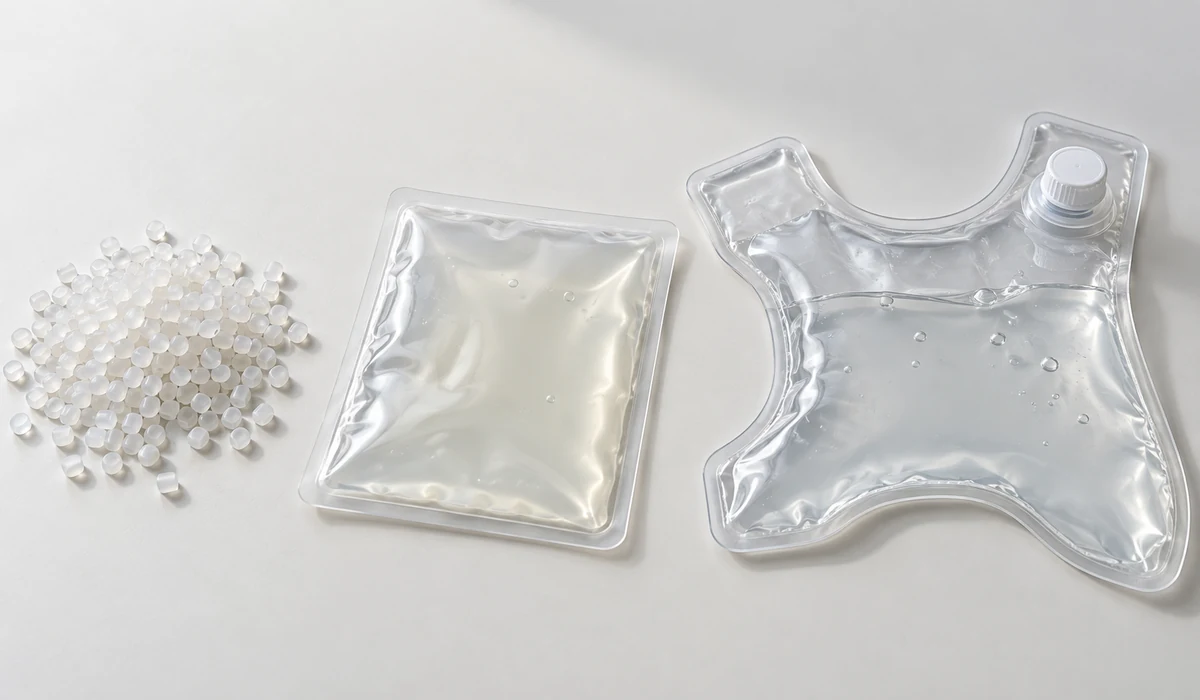
TPU is a polymer that combines rubber-like elasticity with the processing capabilities of plastic. It is commonly used in product manufacturing as pellets, films, sheets, or coatings. Its elasticity, abrasion resistance, oil resistance, and processing versatility make it widely used in sporting goods, protective accessories for electronics, automotive components, pet apparel, and functional consumer products.
What Types of TPU Are Available?
TPU is commonly classified in two ways. Based on the raw materials used in its soft segments, the main categories include polyester-based, polyether-based, and polycarbonate-based TPU, along with polycaprolactone-based TPU, which is often discussed separately. Based on the chemistry used in its hard segments, TPU can be classified as aromatic or aliphatic. These classifications can overlap. For example, a material can be both polyether-based and aromatic.
Classification by Soft-Segment Raw Materials
The following types of TPU use different raw materials and emphasize different performance characteristics. Polyester-based TPU generally emphasizes abrasion resistance and mechanical strength. Polyether-based TPU typically offers better hydrolysis resistance and low-temperature flexibility, making it suitable for components exposed to moisture or required to remain flexible at low temperatures. Certain polycarbonate-based grades emphasize long-term stability, oxidation resistance, and resistance to specific chemicals. Polycaprolactone-based TPU is a specialized branch of the polyester family that can combine flexibility with mechanical strength. No single type is best for every application. Selection should be based on the specific grade, operating environment, and processing requirements.
Polyester-Based TPU
Polyester-based TPU takes its name from the polyester raw materials used to produce it. It is commonly used in products that require abrasion resistance or the ability to withstand tensile loads or repeated bending, such as footwear components, conveyor belts, and abrasion-resistant films.
Some polyester-based TPU grades may gradually degrade and lose strength after prolonged exposure to hot, humid conditions. This moisture-driven breakdown is called hydrolysis. This does not mean polyester-based TPU cannot come into contact with water. Rather, the specific grade must be evaluated to determine whether it is suitable for the product’s intended use and cleaning conditions.
Polyether-Based TPU
Polyether-based TPU is made using polyether raw materials. It typically offers good hydrolysis resistance, meaning it is less susceptible to strength loss caused by hydrolysis after exposure to moisture. It also retains flexibility at lower temperatures and is less prone to stiffening, making it commonly used in tubing, flexible films, and components that may come into contact with moisture.
Polyether-based TPU is commonly used to manufacture tubing, waterproof films, inflatable mattress bladders, and water reservoirs—products or components that require flexibility and resistance to water exposure. Its hydrolysis resistance and low-temperature flexibility make it suitable for applications involving moisture or requiring flexibility in colder conditions.
Polycarbonate-Based TPU
Polycarbonate-based TPU uses polycarbonate polyols to form its soft segments. Commercial grades are available for applications requiring heat resistance, hydrolysis resistance, or chemical resistance, including functional components with demanding durability requirements.
Common applications include medical tubing and flexible components in medical devices. These products need materials that remain flexible and stable when exposed to bodily fluids or specific operating conditions.
Polycaprolactone-Based TPU
Polycaprolactone-based TPU is made using polycaprolactone polyols. Certain grades combine flexibility, transparency, and mechanical performance and are used in products such as belts and extruded profiles.
Classification by Hard-Segment Chemistry
Aromatic and aliphatic TPU use different chemical raw materials. The most noticeable difference is their resistance to yellowing. Aromatic TPU is more prone to yellowing when exposed to sunlight or ultraviolet light and is commonly used in footwear components, tubing, and cable jackets. Aliphatic TPU is generally less prone to yellowing and is therefore often used in clear protective films and light-colored components where appearance stability matters.
Aromatic TPU
Aromatic TPU incorporates aromatic chemistry in its hard segments. Different formulations can be used in footwear materials, tubing, cable jackets, and other components.
Appearance stability is particularly important when the product is transparent, light-colored, or exposed to sunlight for extended periods. Some aromatic TPU grades are prone to yellowing under UV exposure. Whether this is acceptable depends on the product design and consumer expectations for appearance.
Aliphatic TPU
Aliphatic TPU incorporates aliphatic chemistry in its hard segments. Because certain grades offer good resistance to UV-induced yellowing, they are often considered for clear protective films and other products where long-term appearance matters.
This does not mean aliphatic TPU outperforms aromatic TPU in every respect. Buyers should still compare the weathering performance, processing suitability, and cost of specific grades.
Specialty Grades Developed for Specific Applications
Material suppliers also offer TPU grades developed for specific applications, such as food contact and medical use. “Food-contact use” describes a grade’s intended application and applicable conditions; it is not a chemical classification equivalent to “polyester-based” or “polyether-based.”
For example, when sourcing a product that may come into direct contact with food, buyers need to verify not only the TPU grade but also the types of food involved, contact temperature and duration, and the other materials in the finished product. The U.S. FDA also distinguishes food-contact substances according to their identity, intended use, and conditions of use.
How Is TPU Processed into Films and Other Products?
TPU can be formed using conventional thermoplastic processing equipment. Major methods listed by material suppliers include injection molding, extrusion, and blow molding. Film production can use extrusion processes such as cast film extrusion or blown film extrusion. Different methods produce different product forms.
Step 1: Select the Grade and Prepare the Material
Before processing begins, the target product must be defined: Is it a film, thick sheet, tube, or component with a defined shape? Target thickness, flexibility, color, and any subsequent lamination requirements all influence grade selection.
Tip: A TPU grade is the product designation or name a material supplier assigns to a specific TPU formulation. Think of “TPU” as the broad material category and a “grade” as a particular material product with defined properties.
Step 2: Extrude the Material into Film or Sheet
During extrusion, TPU is heated and plasticized, then passed through a die to form a continuous material. Different film processing methods can be selected depending on the required form.
Cast film or flat-die extrusion passes molten material through a flat die, followed by cooling, haul-off, and winding to produce film or sheet. This is a common processing route for products requiring control over surface characteristics and thickness. The achievable thickness range depends on the grade, equipment, and processing conditions.
Blown film extrusion forms the molten material into a film bubble, which is then cooled and wound into film. Certain TPU grades are suitable for this process and can be used in subsequent fabric lamination or protective-layer applications.
For example, when developing a flexible film for a mat, manufacturers need to consider the target thickness, feel, dimensions, subsequent lamination method, and processing recommendations for the selected grade before choosing a suitable film production process.
Step 3: Lamination, Cutting, and Finished-Product Fabrication
Once the film has been produced, it may need to be combined with fabric or other materials. This can involve lamination or coating processes suited to the product’s construction. Subsequent operations may include cutting, forming, edge sealing, or sewing.
For example, TPU film can be laminated to stretch fabric containing LYCRA® fiber to maintain flexibility and stretch while using the fabric layer to provide surface protection. Actual abrasion resistance depends on the fabric composition, construction, and lamination process.
Components with Defined Shapes: Injection Molding
Plasticized TPU is injected into a mold and cooled to produce parts with defined shapes, such as footwear components and connectors.
Uwin’s TPU Applications: Selecting Materials for Flexible Containment Components
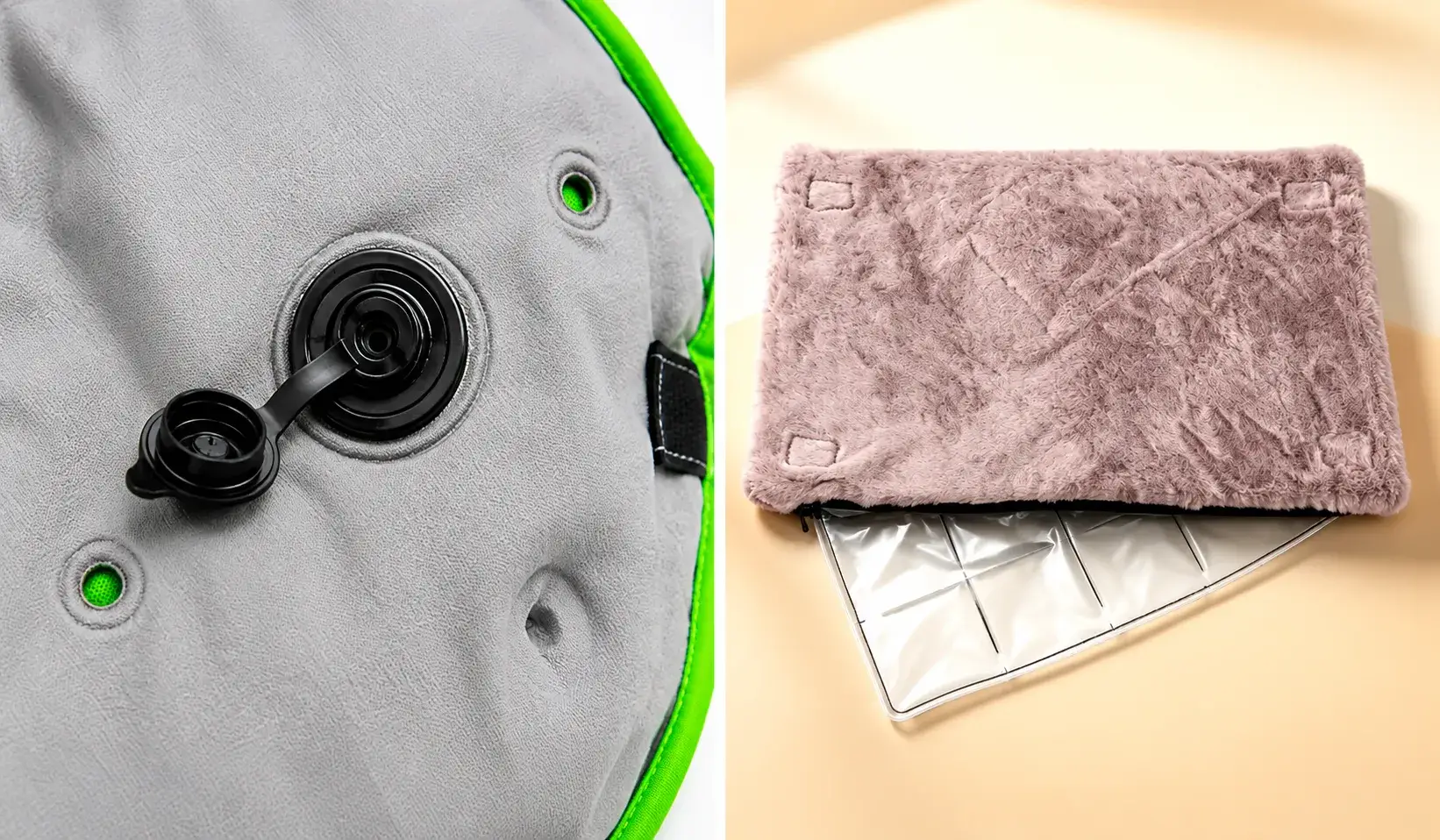
Because of TPU’s thermoplastic properties and flexibility, adjoining film surfaces can fuse under appropriate temperature and pressure conditions. After cooling, they form a continuous seal while retaining the component’s flexibility. Uwin therefore primarily uses TPU for internal functional components that contain gases or liquids, such as PCM thermal storage bladders in low-voltage heated pet mats, water-holding bladders in summer pet cooling vests, and related components in pet mattresses currently under development.
In Uwin products, TPU is primarily used for internal functional components, such as pouches that contain liquid phase change material (PCM) and water-holding bladders in water-filled pet cooling vests. These components need to contain liquids reliably while remaining soft and easy to bend. Suitable TPU film, combined with an appropriate sealing process, helps reduce leakage and protect surrounding fabrics and other components.
Frequently Asked Questions
Is TPU Plastic or Rubber?
TPU is a thermoplastic elastomer that combines the processing characteristics of plastic with rubber-like elasticity. It can be heated and formed like a thermoplastic while remaining flexible, bendable, and resilient.
What Are the Disadvantages of TPU?
TPU’s limitations vary by type and grade. Some polyester-based TPU grades are susceptible to hydrolysis during prolonged exposure to hot, humid conditions, while aromatic TPU may yellow under UV exposure. TPU raw materials also absorb moisture and typically require drying before extrusion or injection molding, making control of processing conditions important.
Can TPU Be Made into Film and Laminated to Fabric?
Yes. The selected grade should be suitable for film production and the subsequent lamination process. Target thickness, surface requirements, and the performance of the finished fabric laminate should also be verified.
Why Is Drying Important Before Processing TPU?
Moisture in the material can affect processing consistency and finished-product performance. Material preparation should follow the processing guide for the specific grade. Drying conditions specified for one supplier’s grade should not be applied to all TPU materials.
Is TPU Raw Material Toxic to Humans?
If this refers to TPU that has already been manufactured into pellets or film, it is generally not considered a high-hazard material under normal contact conditions at room temperature. However, this does not establish that every grade is suitable for prolonged skin contact or food contact, nor does it replace the relevant safety data sheet and verification of suitability for the intended use.
For more information, see “Is TPU Raw Material Toxic to Humans?”
Conclusion
TPU’s value lies in its ability to meet the needs of films, laminated fabrics, footwear components, tubing, and other products through different material structures, grades, and processing methods. Classifications such as polyester-based and polyether-based provide a starting point for material selection. Whether the final product meets its performance targets depends on the specific grade, production process, and finished-product validation.
For mat products, buyers should pay particular attention to which layer contains TPU, what function it serves, and how it works with fabrics and other materials to form the complete product.
In Uwin’s product development, TPU is primarily used in flexible components that contain gases or liquids. Examples include PCM thermal storage bladders in low-voltage heated pet mats, water-holding bladders in summer pet cooling vests, and related components in pet mattresses currently under development. We focus not only on the material itself but also on how it works with fabrics, filling materials, and sealed structures.
If you are developing related pet products, share your product concept, intended use, and functional requirements with Uwin to discuss material selection, component construction, and custom development options.
UWIN Invites You to Discover the Future of Home Goods at the 2025 Spring Canton Fair (Phase II)
Discover the latest in home goods innovation with UWIN at the 2025 Spring Canton Fair (Phase II)! Explore our new materials, designs, and IP-derived product solutions. Find us at Booth 16.3 E31-33 F12-14!
Is TPU Toxic? Is It Suitable for Everyday Products?
The short answer is that TPU can be used in everyday products. Under normal temperatures and...
Four Pet Warming Mat Solutions from Uwin: Warmth, Heat Storage, and Use Cases
The Four Warming Mats at a Glance What they have in common: All four products are designed to give...
Join Us at the 140th Canton Fair: New Pet Travel, Temperature-Control, and Senior Care Solutions
GUANGZHOU, CHINA — The 140th China Import and Export Fair (Autumn Canton Fair) is approaching....
PVC Foam vs. EVA Foam: Which Material Is Better for Mats?
PVC foam is generally better suited to kitchen mats, doormats, commercial floor mats, and...
How Uwin Manufacturing Helps Brands Develop More Washable and Durable Mats
For brands, retailers, e-commerce sellers, and purchasing teams, post-wash complaints are rarely...