
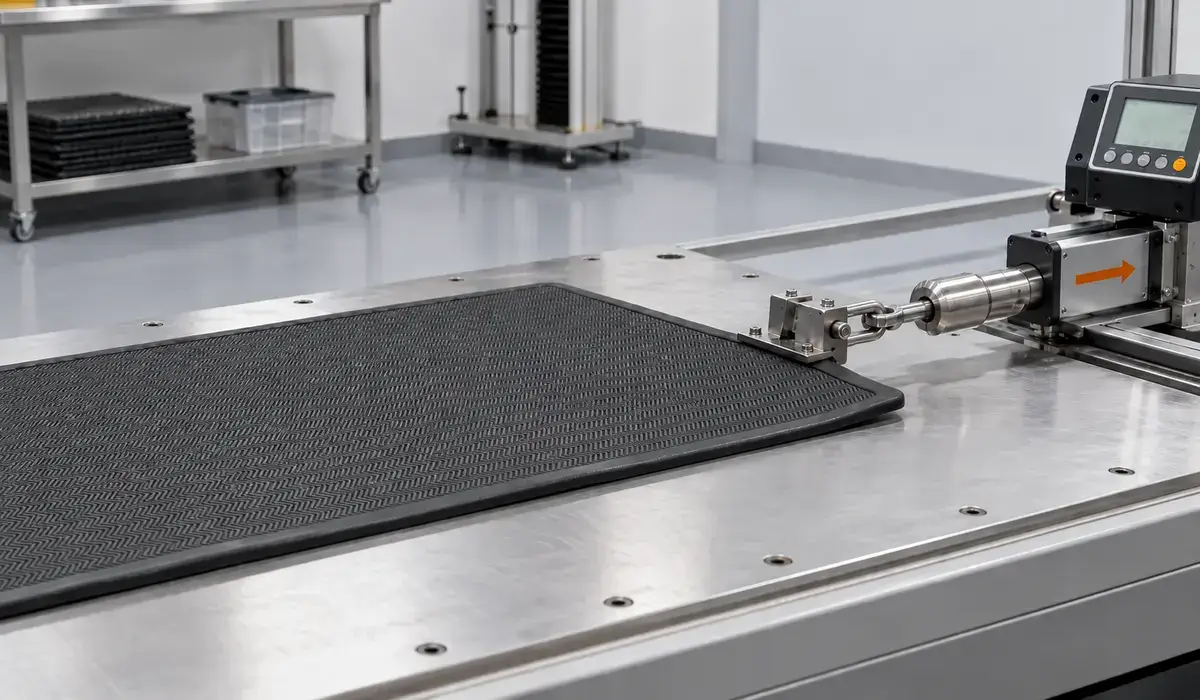
Even if a mat stays firmly in place on hard flooring, it may still slide when placed on carpet. The reason is usually not simply a lack of friction. Carpet fibers compress, recover, and shift under repeated pressure, while the backing of a mat can move across the fibers. A rug pad designed for tile or hardwood may therefore perform poorly on soft, loop-pile, or high-pile carpets.
For consumers, the practical solution is to use a backing system designed for carpet, choose the correct mat size, install it properly, and test performance under real use conditions. For brands and product developers, however, preventing movement requires a deeper understanding of why mats shift and how product structure affects stability.
A mat that moves, wrinkles, or curls at the edges can quickly become a customer complaint and eventually a safety concern. Retailers may see more returns and negative reviews, while product teams often receive vague requests to “make it more slip-resistant” without the information a manufacturer needs, such as carpet type, mat weight, backing construction, and usage conditions. The right approach is to identify the cause of movement first, then select the appropriate materials and construction.
Why Floor Mats Slip on Carpet
Carpet is not a flat, rigid surface. It is a layer of fibers that compress and move under pressure. When someone steps on a mat, the carpet underneath compresses and then rebounds. If the mat is lightweight, too small, has curled edges, or uses a smooth backing material, repeated horizontal forces can gradually push it out of position.
Several daily-use conditions can increase this movement:
- Vacuum cleaners can pull on the edges of lightweight mats.
- Pets running, scratching, or playing on a mat create repeated lateral forces.
- Office chairs with wheels can push the surface in multiple directions.
- Doors brushing against a mat edge can gradually shift its position.
For purchasing teams and product developers, two technical concepts are especially important: pile compression, which refers to the temporary flattening of carpet fibers under pressure, and shear movement, which is the horizontal movement between the mat backing, pad, and carpet surface.
Simply specifying “anti-slip” does not give a supplier enough information to optimize the product. Effective slip resistance depends on the actual forces acting on the mat, the carpet structure, and the intended application.
Choose an Anti-Slip Backing Designed for Carpet
Not every anti-slip backing material performs well on carpet. Many anti-slip solutions are developed primarily for hard surfaces such as tile, wood, or vinyl flooring. Carpet has different characteristics: its fibers are soft, flexible, and able to shift, so the backing must provide enough grip while adapting to the texture and movement of the pile.
If the backing cannot interact effectively with the carpet surface, the mat may still move during normal use. When developing mats for carpet applications, manufacturers should consider high-friction backing materials, flexible backing layers that maintain grip without damaging carpet fibers, and surface textures suited to different carpet constructions.
PVC, TPR, and rubber-based backings are commonly used because they can provide strong friction performance and help keep mats more stable. However, the best choice depends on the application:
- Kitchen mats need stable positioning under frequent standing and movement.
- Pet mats need to resist movement caused by running, scratching, and jumping.
- Commercial mats must maintain stability under heavier foot traffic.
Selecting a backing is therefore not only a material decision. It is also an application and product-positioning decision.
Add Fixing Systems When Extra Stability Is Needed
In some applications, anti-slip backing alone may not provide enough stability. Additional fixing solutions can help prevent movement in areas exposed to repeated impact, pulling forces, or frequent repositioning. The appropriate solution depends on the product type, cleaning requirements, and whether the mat needs to be moved regularly.
Double-Sided Tape
Double-sided tape is suitable for smaller mats or applications where edge movement needs to be reduced. It can help prevent corner lifting, edge curling, and minor shifting during daily use.
However, suppliers and brands should consider whether the adhesive is suitable for carpet surfaces, whether it may leave residue after long-term use, and whether it affects cleaning or repositioning. For retail products, removable adhesive solutions are usually more practical than permanent bonding methods because consumers may need to clean, relocate, or replace the mat.
Hook-and-Loop Fastening
Hook-and-loop systems provide stronger fixation while remaining removable, making them suitable for products that require regular cleaning or repositioning. Pet mats, modular floor mats, and some outdoor mats can benefit from this structure because users can remove the product while maintaining stable positioning during use.
The placement and quantity of fastening points should be designed according to the mat size, weight, and expected use frequency. Too few fixing points may not prevent movement effectively, while too many may make installation inconvenient or create uneven stress that leads to deformation.
Edge Fixing Structures
Some products use specially designed edge structures or additional fixing components to improve overall stability. These may include wider anti-slip borders, reinforced edge binding, weighted edge designs, or floor attachment components.
These solutions can reduce movement while also minimizing edge curling and lifting. However, the fixing method should still support a good user experience. Permanent adhesive may provide stronger fixation but reduces reusability, while removable systems offer more flexibility for products that require cleaning, repositioning, or seasonal replacement.
Keep Edges Flat With Anti-Curling Treatment
Slip resistance is not only about preventing horizontal movement. It also depends on maintaining a flat and stable product shape over time. Many mats move because curled or lifted edges reduce the contact area between the mat and the carpet.
Manufacturers should therefore pay close attention to edge treatment, shrinkage control, material matching, and recovery performance after folding or rolling.
Edge Heat Treatment
Edge heat treatment uses controlled heat and pressure to stabilize a mat after cutting or forming. It helps reduce curling caused by internal material stress and improves overall flatness.
Hot Knife Cutting
Hot knife cutting uses a heated blade to cut and seal thermoplastic materials at the same time. This process helps reduce fraying, edge deformation, and curling after cutting.
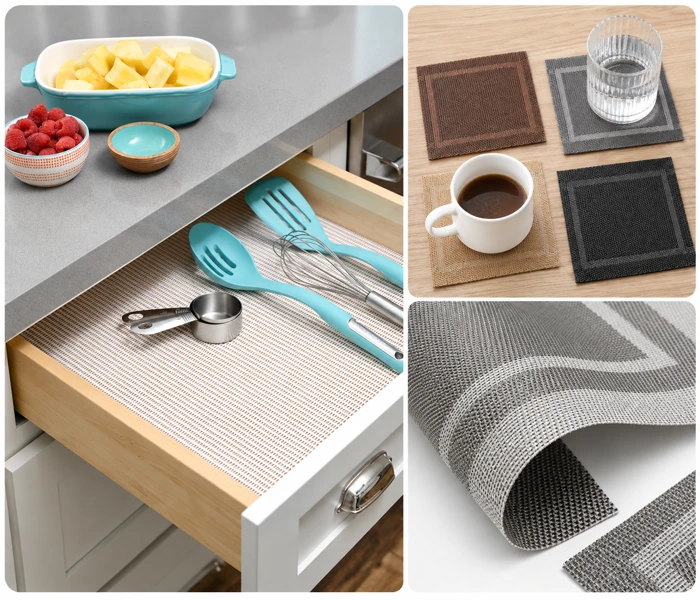
It is suitable for PVC anti-slip mats, EVA floor mats, drawer liners, and table protection mats.
Heat Press Edge Sealing
Heat press edge sealing uses heated molds to apply controlled pressure and temperature to the product edge. It can improve edge stability, thickness consistency, and long-term flatness.
This process is suitable for multi-layer composite mats, pet mats, outdoor mats, and products requiring strong shape retention.
Ultrasonic Edge Sealing
Ultrasonic edge sealing uses high-frequency vibration to generate heat and bond material layers without additional adhesives or stitching. It provides a cleaner edge appearance, improved sealing performance, and a lower risk of edge separation.
It is especially useful for waterproof mats, TPU composite products, and products requiring strong sealed edges.
Edge Binding Processes
Edge binding adds an additional material layer around the mat perimeter to protect the structure and improve durability.
Binding Tape Edge
Binding tape uses nylon, polyester, or polypropylene webbing to cover and reinforce the edge through stitching or heat bonding. It improves abrasion resistance, reduces edge tearing, and supports better shape retention.
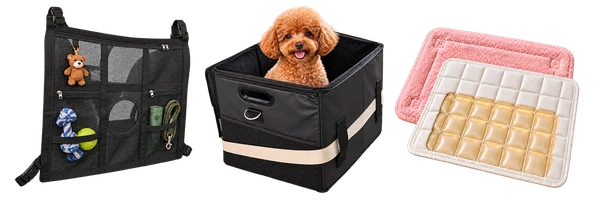
This method is commonly used for pet mats, pet car mats, and outdoor leisure mats.
PVC Edge Binding
PVC edge binding uses flexible PVC strips around the perimeter of a product. The strips can be fixed through heat welding, bonding, or other sealing methods. This structure provides better water resistance, more defined edges, and improved durability in frequently cleaned environments.
Suitable applications include bathroom mats, kitchen mats, and industrial anti-fatigue mats.
Rubberized Edge
A rubber or TPR border can be added around the outer edge of a mat to increase weight, grip, and structural stability. This helps reduce edge lifting, improve contact with the floor surface, and support better slip resistance.
It is suitable for larger floor mats, fitness mats, and commercial anti-fatigue mats.
Control Material Shrinkage and Layer Matching
Different materials may expand or shrink during manufacturing, transportation, and long-term use because of temperature changes and internal stress. Poor shrinkage control can lead to dimensional changes, surface waves, edge deformation, and product curling.
Pre-Shrink Treatment
Before final production, materials such as PVC and EVA can undergo pre-shrink treatment to release internal stress. This reduces dimensional changes after production and helps maintain product stability during use.
Material Aging and Conditioning
After manufacturing, materials can be stored under controlled conditions for a specific period to allow their internal structures to stabilize. This supports better shape retention, dimensional consistency, and long-term performance.
Multi-Layer Material Matching
For composite products such as PVC-and-fabric or TPU-and-textile structures, manufacturers must control shrinkage differences between layers. If the upper and lower materials shrink at different rates, the product may warp or become uneven.
Proper material matching helps prevent deformation and improves long-term flatness.
Test Recovery After Folding and Transportation
For mats shipped in rolled or folded packaging, recovery performance is an important quality factor. If a mat cannot return to a flat condition after transportation, customers may experience persistent wrinkles, curled edges, poor floor contact, and reduced slip resistance.
Manufacturers can improve recovery performance by increasing material thickness and density, optimizing flexibility and elastic recovery, and conducting realistic curl-recovery testing.
A thicker, denser PVC floor mat, for example, usually maintains its shape better than a thin flexible sheet after being rolled for transportation. EVA and TPU materials should balance softness with recovery performance: they need to remain comfortable and flexible without developing excessive memory curl.
During product development, testing should simulate real transportation and usage conditions, including long-term roll testing, folding pressure testing, and flatness recovery testing. This is particularly important for large kitchen mats and pet mats exported to North America and Europe, where extended transportation time can affect the product’s initial appearance and performance after unpacking.
FAQ
How can you keep floor mats from sliding on carpet?
Choose an anti-slip backing designed specifically for carpet surfaces or use an appropriate fixing method. The mat should match the application area in size, be installed flat, and be tested under realistic conditions.
If the mat continues to move, review the carpet pile height, mat weight, edge curling, backing material, and installation method. Adding more adhesive is not always the best solution; a properly designed backing structure usually provides better long-term performance.
Can anti-slip pads be used on carpet?
Yes, but the anti-slip pad must be designed for carpet applications and matched with both the carpet type and the mat construction. Before use, confirm that the solution does not create raised edges, damage carpet fibers, leave residue, or reduce long-term stability.
A backing designed for hard flooring may not perform effectively on soft carpet.
Why do floor mats move after vacuuming?
Vacuum cleaners can create pulling forces through suction and rotating brush heads, especially on lightweight mats or products with lifted edges. To evaluate stability properly, testing should include real cleaning conditions rather than only static placement tests.
For residential and commercial carpet-mat applications, vacuum testing should be included in product performance evaluation.