
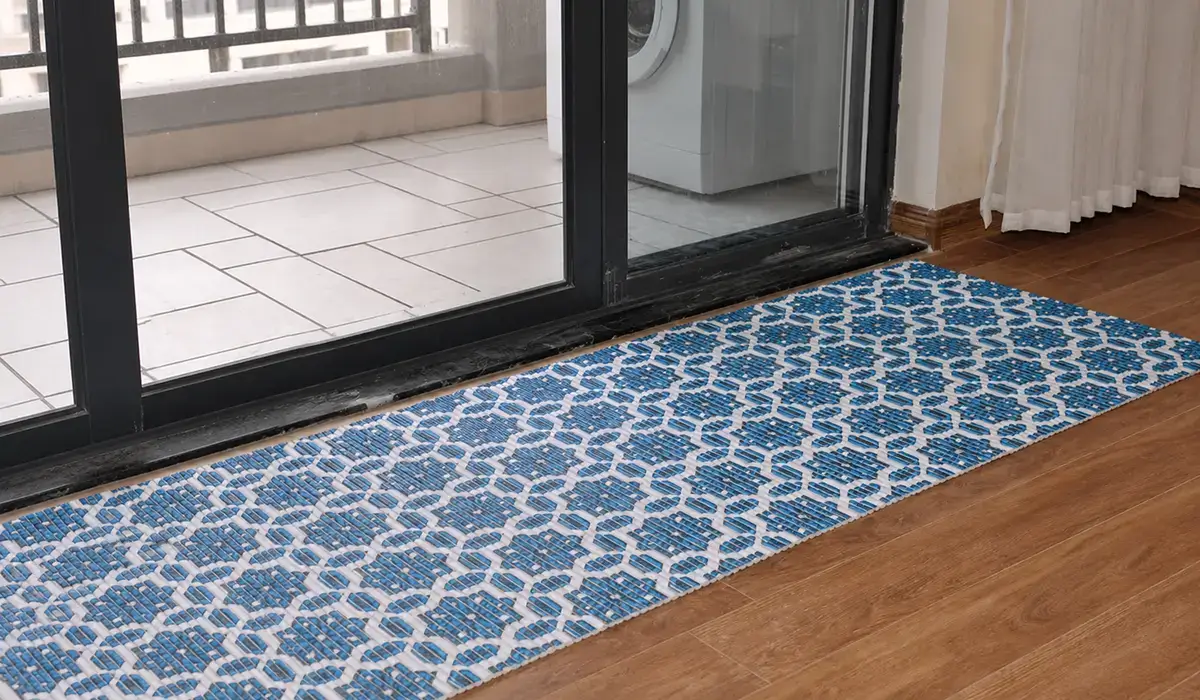
When a mat shifts forward, curls at the edges, or bunches up on carpet, consumers do not usually stop to consider carpet pile height, underlay compatibility, or backing construction. They simply feel that the product is unstable and inconvenient to use. In some households, they may also worry that a loose mat could become a trip hazard for children, older adults, or pets.
That concern should not be dismissed. The U.S. Bureau of Labor Statistics reported 479,480 private-industry cases involving days away from work due to falls, slips, and trips in 2024. This figure is not specific to residential carpet mats, but it shows why stable walking surfaces remain an important concern in high-traffic environments.
For this reason, brands selling anti-slip mats should do more than add the words “non-slip” to a product page. During development, they should define the target carpet type, mat size, expected traffic, vacuuming routine, and whether the mat needs to be removed easily for cleaning. They can then work with the supplier to determine whether a separate carpet underlay, a heavier integrated backing, or a more secure fixing method is appropriate. Samples should be evaluated on the intended carpet under realistic conditions, and the final product page should clearly explain suitable surfaces, installation steps, and usage limitations. The goal is not to sell a vague non-slip claim, but to offer a product system that is easier for consumers to use correctly and less likely to generate movement-related complaints.
Why Mats Move on Carpet in Real Consumer Use
In everyday use, mats usually move on carpet for more than one reason. Walking, turning, pulling out a chair, opening a door, and vacuuming can all apply force in different directions. If a mat is lightweight, relatively small, smooth on the underside, or has edges that curl after shipping and installation, repeated use can gradually move it away from its original position.
Carpet construction also affects the result. Low-pile, tightly woven office carpet, soft high-pile residential carpet, and modular commercial carpet tiles do not behave in the same way. The same mat may remain stable on one carpet and move noticeably on another. For brands and buyers, the priority is not to promise that a mat will never move. It is to define the target carpet, mat dimensions and weight, consumer cleaning habits, and expected traffic before sampling. With that information, a supplier can assess whether the product may benefit from a separate underlay, a revised backing construction, improved edge flatness, or a more secure fixing method for higher-traffic areas.
Understanding How Mats Stay in Place
Mat stability is rarely created by one material alone. It usually comes from increasing grip between the anti-slip mat and the carpet, reducing edge lift, limiting sideways movement, or adding weight and structural stability to the mat itself. Brands should select the right approach based on mat size, target carpet type, expected traffic, and whether consumers need to remove the mat easily.
| Stabilising method | How it works | Typical applications | Main advantage | What buyers should tell the supplier |
|---|---|---|---|---|
| Carpet-compatible anti-slip underlay | A thin underlay is placed between the mat and the carpet. Its open mesh, textured, or lightly gripping surface helps the mat and carpet resist movement against each other. | Mats that need to be removed for cleaning or replacement; applications where adhesive residue on carpet is not acceptable. | Flexible and easy to replace. It does not require changes to the visible mat and makes it easier to compare mat-and-carpet combinations during development. | Carpet type and pile height; mat dimensions and weight; vacuuming routine; pets, rolling chairs, or door contact. |
| Adhesive fixing | Adhesive strips, pads, or bonding layers hold the mat more firmly to the carpet or floor surface. | Display areas, light commercial applications, or locations where the mat should remain in a defined position. | Provides stronger positional control than a loose underlay when the installation and removal requirements are clear. | Whether the mat must be removable; acceptable residue level; carpet warranty requirements; replacement cycle; temperature and humidity conditions. |
| Mechanical fixing | Physical components such as clips, hooks, edge anchors, or fasteners secure the mat at selected points and limit pulling forces. | Commercial entrances, high-traffic areas, work zones, or locations affected by trolleys, equipment, or door movement. | A more dependable option when friction alone is not enough to keep a mat in position. | Carpet or floor construction; whether fixings are permitted; trip-hazard requirements; cleaning access; expected traffic and equipment load. |
| Heavier integrated backing | Greater mat weight, a denser backing, or a purpose-designed backing construction helps improve the mat’s own stability. | Retail floor mats, branded home mats, and projects where a clean, all-in-one product is preferred over separate accessories. | Simpler for consumers to use, with no extra component to place, trim, or lose. | Target dimensions; acceptable product weight; backing material; edge-curl requirement; packaging method; target carpet type; and cost target. |
How Brands Should Describe Carpet Stability on a Product Page
This is a question many buyers raise during product development: how stable is the mat in actual use? For brands and procurement teams, “non-slip” should not be treated as a stand-alone marketing label. It should be part of a clear product explanation that helps consumers install the mat correctly, use it appropriately, and understand what conditions affect performance.
The more specific the product page is, the easier it is for consumers to decide whether the mat suits their carpet. It also helps brands reduce reviews, returns, and customer-service questions from people who expected the product to work in a situation for which it was not designed.
| What the product page should explain | Why it matters | Example wording |
|---|---|---|
| Suitable surfaces | Carpet pile height, material, and surface structure can affect stability. | Suitable for compatible low- to medium-pile carpet surfaces. |
| Product construction | Consumers should understand whether stability comes from an underlay, the mat backing, or both. | Includes a separate carpet-compatible gripper underlay designed to sit beneath the mat. |
| Installation method | Many movement issues begin when the underlay is too large, exposed at the edges, or not laid flat. | Trim the underlay slightly smaller than the mat, place it flat, and check that all edges sit flush. |
| Usage limitations | This prevents consumers from assuming that the mat will remain fixed on every carpet and in every setting. | Performance may vary with carpet pile, mat size, traffic direction, vacuuming, and floor conditions. |
FAQ
How Do You Keep Floor Mats From Sliding on Carpet?
Use a carpet-compatible underlay or fixing method, trim it inside the edge of the mat, lay the mat flat, and assess it under realistic traffic and cleaning conditions. If movement continues, review the mat size, weight, edge flatness, and carpet pile rather than simply adding more adhesive.
Can an Anti-Slip Underlay Be Used on Carpet?
Yes, provided the underlay is designed for carpeted surfaces and its intended use matches both the mat and the target carpet. Brands should also confirm that it does not create a raised edge, leave residue, or interfere with carpet care requirements.
Why Do Floor Mats Slip After Vacuuming?
Vacuum suction and rotating brushes can pull against a lightweight mat or an edge that has already begun to lift. Vacuuming should be included in stability evaluations, because a mat that stays in place only when untouched does not solve the real consumer-use problem.
Uwin’s Development Approach
Uwin provides functional mat solutions for brands, retailers, and distributors. For carpet-stability projects, we consider the mat, backing, anti-slip underlay, packaging orientation, and installation guidance as connected parts of one product system.
During development and production preparation, Uwin’s quality process can support material confirmation, appearance checks, construction review, and packaging inspection. Where a project requires specific slip-resistance, cleaning, or other functional claims, both parties should agree on the test method, applicable conditions, and acceptance criteria early in the project. Product-specific marketing claims should then be based on the results of the finished sample under the relevant conditions.