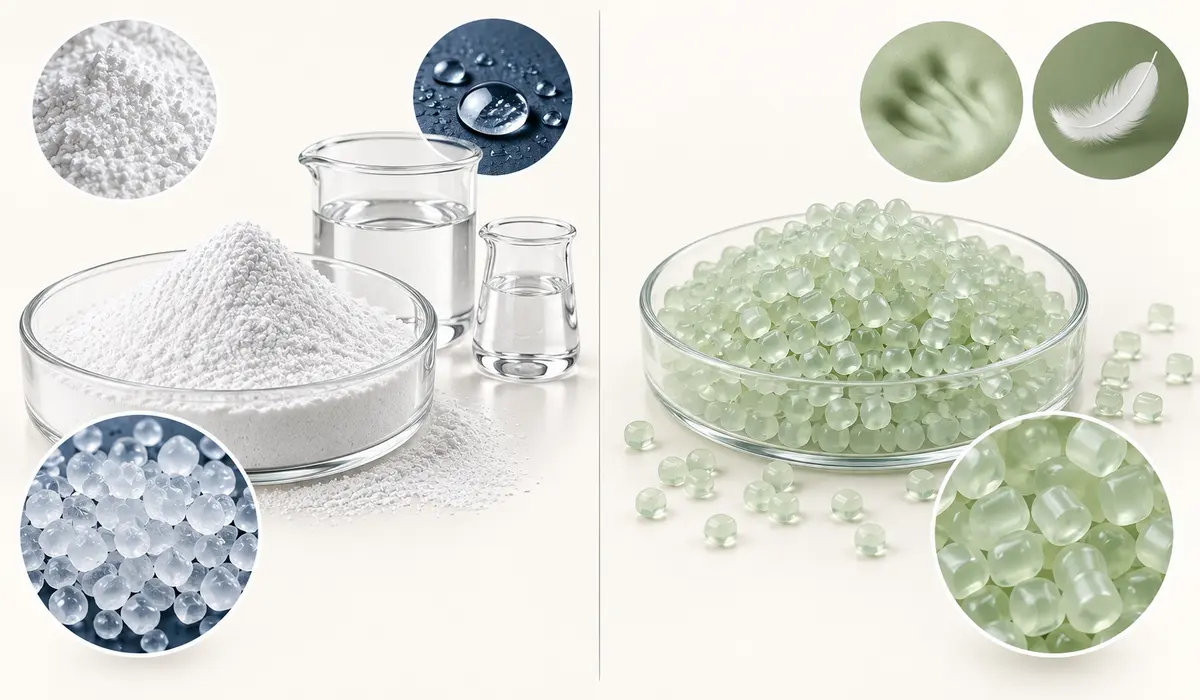
PVC foam is generally better suited to kitchen mats, doormats, commercial floor mats, and anti-fatigue mats. Because it typically uses a closed-cell foam structure, with individual cells that help prevent water and oil from penetrating the material, and because PVC itself offers good chemical and abrasion resistance, it provides better waterproofing, stain resistance, easy cleaning, and durability in high-traffic applications.
EVA foam is often a better fit for heated mats, placemats, and other products that require a lightweight feel, a softer touch, or moderate cushioning. Because EVA has good flexibility and forms a lightweight, resilient cell structure after foaming, it can absorb pressure and impact, then recover its shape quickly. This gives the product a softer feel and better rebound performance.
For yoga mats, fitness mats, and children’s play mats, both PVC foam and EVA foam can be suitable—the right choice mainly depends on the product positioning and performance goals. PVC foam is usually the better option when waterproofing, durability, easy cleaning, and cost control are the priority. EVA foam is often preferred when lightweight construction, softness, rebound, and cushioning are more important.
Next, we will compare PVC foam and EVA foam in greater detail—including material performance, product applications, durability, comfort, and customization needs—to help you select the right material solution for different types of mats.
Introduction
PVC foam and EVA foam are two foam materials widely used in mat manufacturing today.
When developing a product, many buyers ask: Which is better: PVC foam or EVA foam?
From a manufacturer’s perspective, however, this is not a simple either-or question.
Professional material selection needs to consider: application scenario + product positioning + performance requirements + cost target + manufacturing capability.
For example, kitchen anti-fatigue mats and commercial protection mats place more emphasis on long-term compression resistance and durability. Yoga mats and kids’ play mats place more emphasis on softness and cushioning. Therefore, a capable manufacturer does not simply sell one material; it helps brands select the product structure that better matches market needs.
Uwin does not simply choose PVC or EVA based on material cost. Instead, we match materials according to each product’s usage scenario, performance requirements, and market positioning. In our existing product lines, PVC foam is widely used in anti-slip mesh mats, entrance anti-slip mats, yoga mats, and heavy-duty anti-fatigue mats because it offers good waterproof performance, dimensional stability, abrasion resistance, and long-term compression resistance. This makes it better suited to applications that require frequent use, easy cleaning, and stable structure.
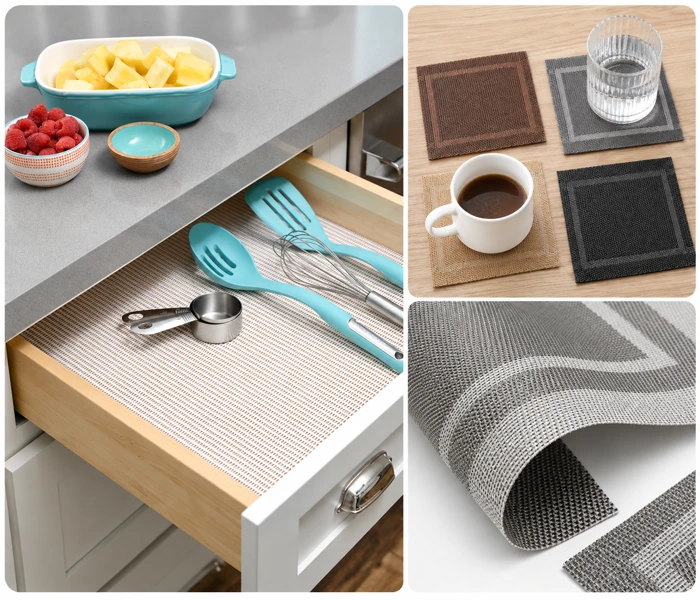
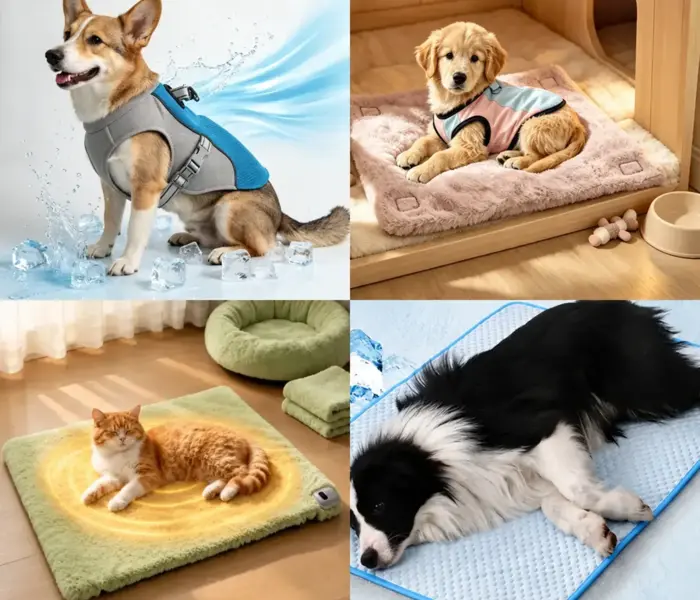
EVA is used more often in pet warming mats, pet feeding spill mats, food-grade refrigerator liners, and anti-slip shelf liners because these products place greater emphasis on a soft feel, cushioning protection, lightweight construction, and ease of installation. EVA provides good elasticity, thermal insulation, and flexibility, making it suitable for applications that need improved comfort, surface protection, or reduced impact. By adjusting material density, thickness, surface texture, and product structure, Uwin’s product development team performs compression testing, density testing, tensile-strength testing, tear-strength testing, and abrasion testing to develop PVC, EVA, or composite-material solutions that better match the customer’s target market and product requirements.
Market Challenge: Why Do Many Brands Struggle to Select the Right Material for Mat Development?
1. Many buyers focus on the following during the early development stage:
- Whether PVC costs less than EVA
- Whether EVA is more environmentally friendly
- Which material has greater market acceptance
However, in actual production, the material itself is only one part of what determines product performance.
2. The same material can deliver very different final performance depending on:
- Density design
- Thickness adjustment
- Foaming process
- Surface treatment
- Backing structure
For example, low-density EVA may feel softer but may not recover sufficiently after long-term compression. High-density PVC foam may provide better support and durability, but it requires structural design to maintain comfort.
Material and Manufacturing Explanation: PVC Foam and EVA Foam Characteristics and Manufacturing Logic
PVC Foam: A Stable, Durable Material Solution
PVC foam is a widely used material for functional mats.
Its key characteristics include:
- Waterproof performance: PVC foam typically has a closed-cell foam structure. Its internal cells are separate from one another, which can reduce moisture penetration and diffusion within the material, resulting in low water absorption and good moisture resistance.
- Abrasion resistance: PVC’s molecular structure offers good chemical resistance and abrasion resistance. Foaming density, surface treatment, and composite-structure design can further improve surface resistance to friction. PVC foam products can withstand long-term foot traffic and daily wear, making them suitable for high-frequency settings such as kitchens, commercial spaces, and industrial environments.
- Dimensional stability: PVC foam provides relatively rigid structural support. Through formulation adjustment and density control during production, the material can maintain good dimensional stability through temperature changes, prolonged compression, and repeated use, helping reduce shrinkage, deformation, and edge curling.
It is therefore commonly used in kitchen anti-fatigue mats, bathroom mats, door mats, and industrial protection mats.
However, the final performance of a PVC foam product is not determined by PVC alone.
The manufacturing process also needs to control:
- Foaming ratio: The foaming ratio determines the number of internal cells and the overall softness of the material. A higher foaming ratio can make a product lighter and softer but may reduce compression resistance. A lower foaming ratio generally provides better support and durability.
- Cell structure: A uniform, stable cell structure helps a product achieve better resilience, cushioning performance, and long-term stability while avoiding localized collapse or inconsistent performance.
- Density: Higher density typically means better compression resistance and durability, making it suitable for heavy-duty anti-fatigue mats. Lower density can provide a softer feel for products that prioritize comfort.
- Surface texture: Embossing, printing, or special surface treatments can improve both functionality and appearance.
- Anti-slip backing design: Examples include PVC anti-slip patterns, mesh structures, or composite anti-slip layers that reduce movement and improve safety during use.
EVA Foam: A Lightweight, Cushioned Material Solution
EVA (ethylene vinyl acetate) is a foam material with good elasticity and cushioning performance.
It is commonly used in yoga mats, fitness mats, kids’ play mats, and sports protection products.
The main advantages of EVA foam include:
- Lightweight construction: EVA foam forms many uniform, independent cells within the material. This reduces overall weight while maintaining a certain thickness and cushioning performance.
- Soft feel: EVA contains vinyl acetate, which improves material flexibility. As a result, foamed EVA offers good elasticity and a soft feel.
- Good shock absorption: EVA’s closed-cell foam structure deforms under pressure or impact. By compressing the cells, it absorbs part of the external energy and reduces impact transfer.
However, EVA also needs to be adjusted according to the application:
- EVA density: Lower-density EVA is lighter and softer with a stronger cushioning feel, but its long-term compression resistance is relatively weaker. Higher-density EVA has a tighter cell structure that provides better support and compression recovery.
- Thickness: Thicker EVA can provide better shock absorption, insulation, and comfort for products such as pet mats and exercise mats. Thinner EVA is lighter and easier to cut, making it suitable for refrigerator liners, drawer liners, and shelf-liner applications.
- Surface texture: Embossing, raised patterns, or special surface treatments can improve anti-slip performance and user experience. For example, yoga mats need stronger grip, while shelf liners focus more on keeping items stable in place.
- Anti-slip structure: Designing anti-slip surface textures, mesh backing structures, or composite anti-slip layers can reduce movement and improve safety during use.
Quick Comparison Table
| Material | Main Characteristics | Suitable Products |
|---|---|---|
| PVC Foam | Waterproof, abrasion-resistant, dimensionally stable, and strong under compression; suitable for high-frequency-use environments | Anti-fatigue mats, kitchen mats, bathroom mats, entrance mats, industrial mats |
| EVA Foam | Lightweight, soft, well-cushioned, and thermally insulating; suitable for scenarios requiring comfort and protection | Yoga mats, fitness mats, pet warming mats, kids’ play mats, shelf liners |
How Uwin Manufacturing Enhances PVC and EVA Foam Performance
Enhance EVA Foam Performance
EVA foam naturally provides softness, flexibility, and cushioning, but its final performance depends on material formulation and structural design. Uwin company improves EVA performance through material selection, density control, and functional treatment to create safer, more durable, application-focused mat solutions.
For food-grade EVA mats and protective liners, Uwin uses selected EVA materials together with imported Japanese silver-ion antibacterial additives to help improve hygiene performance, moisture resistance, and everyday durability. Through optimized density, thickness, and surface structure, EVA products achieve a balance of softness, strength, and anti-slip performance while supporting compliance requirements such as FDA, REACH, and LFGB according to market needs.
Optimize PVC Foam Performance
PVC foam is valued for its waterproof performance, durability, and structural stability, but these advantages depend on precise manufacturing control. Uwin enhances PVC mat performance through optimized formulations, controlled foaming technology, and surface-structure design.
By adjusting foam density, cell structure, and backing design, Uwin develops PVC mats with improved cushioning, compression resistance, and anti-slip performance. Advanced processes such as high-frequency edge sealing, embossing, and lamination further improve durability, appearance, and long-term usability while supporting compliance testing requirements including REACH, CA65, OEKO-TEX, and SVHC.
Common Mistakes
Mistake 1: Assuming the Lowest-Priced Material Is the Best Choice
Low-cost materials may reduce initial purchasing costs, but if they lead to:
- Shorter product life
- More consumer complaints
- Higher return rates
the final cost may be higher.
Mistake 2: Looking Only at the Material Name and Not the Product Structure
An “EVA product” or “PVC product” does not represent final performance.
When sourcing, buyers should pay attention to:
- Material grade
- Density
- Thickness
- Structural design
- Test results
Mistake 3: Overlooking Target-Market Standards
Different markets may require:
Compliance requirements vary by target market, product application, and retailer requirements. Before confirming materials, product structure, and packaging, identify the compliance documents required for your intended sales market.
- European Union: Prepare REACH and SVHC documentation for products entering the EU market.
- European retail and skin-contact products: Arrange OEKO-TEX testing when required by the retailer or product category.
- United States—California: Ensure compliance with California Proposition 65 (CA Prop 65) for products sold in California.
- Other markets and retail programs: Confirm any additional testing, labeling, or documentation requirements before production begins.
Uwin can support material selection and arrange the required testing according to your target market and product requirements. Testing costs are quoted based on the applicable standard and project scope.
How Uwin’s Manufacturing Capabilities Address These Needs
Product Development and Customization Capability
Uwin supports complete product development services, including:
- Product structure design
- Size and thickness optimization
- Material selection and formulation adjustment
- Surface texture and functional design
- Printing and branding solutions
- Custom packaging development
Based on the target application, Uwin helps brands evaluate factors such as durability, comfort, anti-slip performance, waterproof requirements, and production feasibility to create products that match their market positioning.
Integrated PVC and EVA Manufacturing Capability
With three company-owned manufacturing facilities, a 35,000 m² production base, and more than 600 employees, Uwin supports both product development and scalable production.
Our manufacturing capabilities include:
- PVC foam mat production
- EVA foam product processing
- Lamination and bonding
- Surface treatment and embossing
- Printing and customization processes
Production capacity includes:
- PVC mats: 800,000+ pcs/month
- EVA mats: 200,000+ pcs/month
This integrated manufacturing capability allows Uwin to support brands from prototype development to stable mass production with consistent quality control.
Quality Control and Performance Testing
To ensure product reliability, Uwin applies multiple testing procedures throughout product development and production, including:
- Slip-resistance testing
- Tensile-strength testing
- Compression-recovery testing
- Abrasion-resistance testing
- Color-fastness testing
Testing requirements can be customized according to product applications and target markets.
Uwin can support compliance testing requirements including:
- REACH
- OEKO-TEX
- SVHC
- 17P (European requirements)
- California Proposition 65 (CA65)
- VOC testing
- FDA-related requirements
- LFGB food-contact testing
For food-contact applications, Uwin can develop EVA solutions designed for refrigerator mats and other household products that require food-contact compliance evaluation.
From Material Expertise to Reliable Mat Solutions
Choosing the right material is only the first step in successful mat development. Final product performance depends on how materials, structure, manufacturing processes, and testing systems work together.
With experience in PVC and EVA material applications, Uwin helps brands transform product ideas into customized mat solutions with reliable performance, compliance support, and scalable manufacturing capability.
Conclusion: The Right Question Is Not “Which Material Is Better?”
For brands and buyers, the most important question is not: “Which is better, PVC foam or EVA foam?”
It is: “Which material solution is better suited to my product positioning, market needs, and long-term sales goals?”
A manufacturer with material knowledge, manufacturing capability, and testing experience can help brands reduce development risk, improve product consistency, and build long-term supply-chain advantages.
FAQ
1. Is PVC foam better than EVA foam for mats?
There is no universal answer because PVC foam and EVA foam are designed for different application requirements.
PVC foam is often preferred for products that require durability, waterproof performance, dimensional stability, and long-term compression resistance, such as anti-fatigue mats, kitchen mats, and floor protection mats.
EVA foam is commonly selected for applications that require lightweight design, softness, cushioning, and flexibility, such as yoga mats, pet mats, and protective liners.
Professional manufacturers choose the material based on the product’s usage scenario, performance requirements, target market, and production considerations.
2. What is the main difference between PVC foam and EVA foam?
The main difference lies in their material structure and performance characteristics.
PVC foam is a more rigid and stable foam material that provides good durability, waterproof performance, and structural support. It is commonly used for applications requiring frequent use and long-term stability.
EVA foam has a more flexible foam structure, providing better softness, elasticity, and shock absorption. It is widely used in products where comfort, cushioning, and lightweight performance are important.
However, final product performance also depends on factors such as foam density, thickness, surface treatment, and structural design.
3. Which material is better for anti-fatigue mats?
PVC foam is commonly used for anti-fatigue mats because it provides a good balance of cushioning, support, and long-term durability.
For standing environments such as kitchens, workshops, and commercial spaces, anti-fatigue mats need to maintain their structure under repeated pressure. PVC foam can be engineered with suitable density and thickness to provide stable support while reducing foot pressure.
Final performance depends on the PVC formulation, foam structure, thickness design, and surface construction.
4. Which material is commonly used for yoga mats?
EVA foam and PVC foam can both be used for yoga mats, depending on the desired product performance and market positioning.
EVA foam is widely used because of its lightweight structure, soft feel, and cushioning properties, making it suitable for yoga, fitness, and wellness applications.
For customized yoga mats, manufacturers may also consider factors such as surface grip, thickness, durability, printing requirements, and target price range when selecting materials.
5. Can PVC and EVA mats be customized for private-label brands?
Yes. PVC and EVA mats can be customized according to brand requirements and application needs.
Uwin supports OEM and ODM customization, including:
- Product size and thickness
- Material selection
- Foam-density adjustment
- Surface-texture design
- Printing and logo customization
- Packaging solutions
Based on the target market and product positioning, Uwin helps brands develop customized mat solutions from concept development to mass production.
6. How do manufacturers test PVC and EVA mats before production?
Professional manufacturers evaluate PVC and EVA mats through multiple performance and compliance tests before mass production.
Common testing includes:
- Slip-resistance testing
- Tensile-strength testing
- Compression-recovery testing
- Abrasion-resistance testing
- Color-fastness testing
- Dimensional-stability testing
Depending on the target market and product application, manufacturers may also support compliance testing such as REACH, OEKO-TEX, SVHC, CA65, VOC testing, FDA-related requirements, and LFGB food-contact testing.
7. Does Uwin manufacture both PVC foam and EVA foam mats?
Yes. Uwin manufactures both PVC- and EVA-foam-based mat solutions for different industries and applications.
With three company-owned manufacturing facilities, a 35,000 m² production base, and more than 600 employees, Uwin supports product development and scalable production.
Current manufacturing capabilities include:
- PVC foam mat production
- EVA foam product processing
- Lamination and bonding
- Printing and surface treatment
- Customized product development
Uwin’s PVC and EVA product solutions are used in applications including floor protection, anti-fatigue mats, pet products, household protection products, and wellness products.
UWIN Invites You to Discover the Future of Home Goods at the 2025 Spring Canton Fair (Phase II)
Discover the latest in home goods innovation with UWIN at the 2025 Spring Canton Fair (Phase II)! Explore our new materials, designs, and IP-derived product solutions. Find us at Booth 16.3 E31-33 F12-14!
How to Prevent Floor Mats from Slipping on Carpet
Even if a mat stays firmly in place on hard flooring, it may still slide when placed on carpet....
How to Prevent Mats from Slipping and Improve Customer Satisfaction
When a mat shifts forward, curls at the edges, or bunches up on carpet, consumers do not usually...
Dog Comfort on Long Car Rides: What Should Pet Businesses Consider?
A pet car window cushion that recently attracted attention and discussion on social media began...
Traveling With Pets: Product Insights for Brands and Retailers
The potential market for pet travel products is substantial. The American Pet Products Association...
Join Us at the 139th Canton Fair: Discover Innovation for the Silver Economy & Pet Care
GUANGZHOU, CHINA – We are thrilled to announce our participation in the upcoming 139th China...