
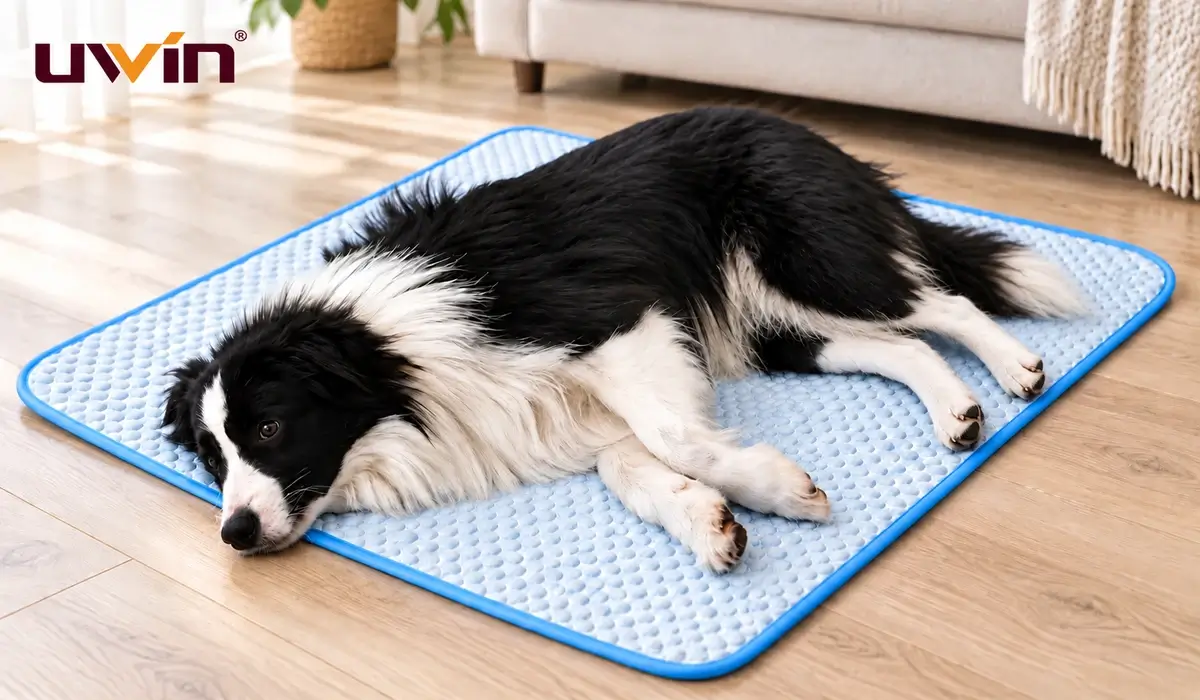
When the weather gets hot, dogs often look for cooler places to lie down, such as tile or hard floors. For pet brands and product buyers, dog cooling mats are also worth exploring as part of a summer pet product lineup.
However, not all dog cooling mats work the same way. Some use an internal gel layer to absorb heat, some rely on cooling fabrics to provide a cool-to-the-touch feel, and others need to be filled with water or use evaporation to help dissipate heat.
How do these designs differ? Which options are better suited to everyday use at home, outdoor activities, or pet travel? And if you are developing a new dog cooling mat, what should you focus on?
Below, we break down the common types of dog cooling mats, how they work, how they are cleaned, and what to consider when choosing one.
How Do Dog Cooling Mats Help Dogs Cool Down?
Simply put, dog cooling mats mainly use heat transfer through contact or water evaporation to help reduce heat buildup while dogs rest, making the surface they lie on feel cooler.
However, a cooling mat does not necessarily provide active cooling, nor does it necessarily keep lowering a dog’s body temperature. Performance can vary considerably depending on the materials and construction.
For example:
- Gel cooling mats: The internal gel absorbs and transfers heat when a dog lies on the mat.
- Cooling fabric mats: The fabric’s cool-to-the-touch feel, heat transfer properties, and breathability help make resting more comfortable.
- Water-filled cooling mats: Water absorbs and transfers heat through its heat capacity. Performance depends on the water temperature, mat construction, and surrounding conditions.
- Evaporative cooling mats: Water evaporation carries heat away. Performance is affected by airflow and humidity.
To decide whether a cooling mat suits a particular use, look beyond its name and understand how it actually works.
Five Common Types of Dog Cooling Mats and Their Differences
| Cooling Mat Type | How It Works | Main Features |
|---|---|---|
| Gel cooling mat | Internal gel absorbs heat when a pet lies on the mat | Usually requires no electricity; some designs need no added water or refrigeration |
| Cooling fabric mat | Uses the fabric’s cool-to-the-touch feel, heat transfer properties, and breathability to improve comfort | Lightweight and soft; some products are machine washable |
| Water-filled cooling mat | Water inside the mat absorbs and transfers heat | Can provide a soft, cushioned feel |
| Evaporative cooling mat | Water evaporation carries heat away | Suited to environments with airflow |
| Refrigerated or ice-pack cooling mat | Uses precooled or frozen components to provide cooling | Can provide a more noticeable cooling sensation for a short period |
Points to Consider
1. Gel Cooling Mats: Check Gel Safety and Encapsulation
Gel formulations vary from product to product, so buyers should confirm the specific materials and review the relevant safety information before purchasing. Reliable encapsulation and sealed edges can also help reduce the risk of gel leakage and pets swallowing the filling. For example, when a water-based polymer gel is enclosed in TPU or PVC film, the gel formulation, film’s resistance to the contents, and edge-sealing process need to be evaluated together to assess seal integrity and reduce the risk of leaks after extended use.
2. Cooling Fabric Mats: Check Fabric Performance and Cleaning Instructions
Cooling sensation, breathability, and abrasion resistance can vary between fabrics, and not all cooling fabric mats are machine washable. Nylon, polyester, and viscose can be used in different types of cooling fabrics, but they differ in moisture absorption, feel, and durability. The finished product’s performance needs to be assessed based on its fabric construction and actual testing.
3. Water-Filled Cooling Mats: Check Leak Resistance and Ease of Use
These products need to hold a certain amount of water. Leaks at the closure or seams can interfere with normal use. The added weight after filling also affects how easy the mat is to move, store, and maintain.
4. Evaporative Cooling Mats: Consider Humidity and Rewetting Requirements
Evaporative cooling mats rely on water evaporation to carry heat away. High humidity or limited airflow can slow evaporation, so actual performance depends on the environment. Buyers should also consider how easy the mat is to rewet and dry.
5. Refrigerated or Ice-Pack Cooling Mats: Check Use Temperatures and Cooling Insert Design
Cooling inserts typically use sealed gel packs or phase change materials (PCM), combined with a fabric barrier. These products need to be refrigerated or frozen in advance. Before use, check the specified temperature range and instructions. An excessively cold insert, an unsuitable barrier layer, or damage to the product may affect both comfort and safety during contact.
These are common design approaches, and individual products may combine different materials and constructions.
1. Gel Cooling Mats: Cooling Without Electricity
Gel cooling mats typically have a layer of gel filling beneath the outer surface. When a dog lies on the mat, the gel absorbs heat transferred from the body, helping the contact surface feel cooler.
Some pressure-responsive products gradually return to their original usable state after the pet gets off. However, recovery time and how long the cooling sensation lasts depend on the gel formulation, construction, and surrounding conditions. Not all gel mats provide the same duration of cooling.
One advantage of this design is convenience. Some products require no electricity, added water, or refrigeration, making them suitable for a pet’s resting area at home.
Still, there are a few things to keep in mind.
First, gel types and formulations vary. Safety should not be judged solely by labels such as “non-toxic” or similar packaging claims. In October 2026, the ASPCA issued a warning about certain consumer products containing polyacrylamide hydrogels, including cases involving some pet cooling mats. For dogs that may chew on the mat, pay particular attention to whether the internal filling could become exposed.
Second, the outer material and encapsulation are just as important. If the surface is chewed through, torn, punctured, or leaking, stop using the mat to prevent pets from coming into contact with or swallowing the filling.
For brand buyers evaluating gel cooling mats, key points to check include:
- The specific gel type and relevant safety information.
- The reliability of the sealed edges and encapsulation.
- The outer material’s resistance to abrasion, scratching, and damage.
- Whether the product remains intact after everyday use and cleaning.
For example, Uwin’s Pet Cooling Mat with TPU Nylon Surface combines TPU, nylon fabric, and gel filling, with customization options for patterns, colors, and packaging.
2. Cooling Fabric Mats: Lightweight Options for Everyday Rest
The main difference between cooling fabric mats and gel cooling mats is that cooling fabric mats rely primarily on the fabric’s properties to create a cooler feel on contact, rather than on internal gel filling.
Some fabrics feel cool when they touch the skin and also offer a degree of breathability or moisture absorption, which can help reduce a hot, stuffy feeling. Actual performance depends on the fiber type, fabric construction, thickness, and overall mat design.
Keep in mind that “cooling fabric” does not mean the fabric actively generates cooling. Even when two products are both labeled as using cooling fabric, their feel on contact and heat dissipation can differ.
This type is generally suitable for:
- Everyday resting areas at home.
- Use inside pet beds or crates.
- Situations where a lightweight, easy-to-store product is preferred.
- Product designs that need to accommodate regular cleaning and repeated use.
Beyond the initial cooling sensation, buyers should check whether the fabric is easy to clean, resists abrasion and pilling, and maintains its performance and appearance after washing.
Uwin’s Pet Cooling Mat uses ice-silk cooling fabric without relying on internal gel filling. It offers one possible product option for brands developing summer resting mats for pets.
To suit different markets and brand positioning, Uwin supports custom sizes, colors, logos, and packaging. Buyers can further evaluate fabric choices, product dimensions, and cleaning requirements based on their target sales channels and intended uses.
3. Water-Filled Cooling Mats: Using Water to Help Transfer Heat
Water-filled dog cooling mats usually require users to add water inside the mat according to the product instructions. Water has heat capacity, allowing it to absorb and transfer heat, so these mats can feel different from ordinary padded mats.
But one point is easy to overlook: adding water does not automatically create cooling.
If the water added is not cool to begin with, the mat will not generate cooling on its own. Actual performance depends on factors such as water temperature, ambient temperature, mat construction, and how long the dog stays on it.
This design may suit uses where a softer, cushioned feel is desired. However, buyers should pay particular attention to a few points:
- Leak resistance: Are the seams and closure reliable, and is the mat prone to leaking after everyday use?
- Weight: Does the mat become too heavy once filled, and is it easy to move and store?
- Cleaning and maintenance: Does the water need to be changed regularly, and is the interior easy to clean and dry?
- Durability: Can the mat remain intact as pets repeatedly step on it, move around, or scratch it?
If the intended users frequently take their dogs out, the product’s weight, folding design, and ease of storage are also worth considering.
4. Evaporative Cooling Mats: Carrying Heat Away Through Evaporation
Evaporative cooling mats usually need to be soaked in water or rewetted according to the instructions. As the water gradually evaporates, it carries away some heat, helping cool the surface.
This works differently from a gel cooling mat. Its performance depends more heavily on environmental conditions, especially airflow and humidity.
Water generally evaporates more readily where air circulates well. In humid environments with little airflow, evaporation may be slower.
When choosing a product, check:
- Whether it needs soaking or regular rewetting.
- Whether the surface feels noticeably damp during use.
- How easy it is to clean and dry.
- Whether its performance meets expectations under different humidity and airflow conditions.
For pet product brands serving customers who regularly spend time outdoors, this design may be worth exploring. However, first confirm that the intended environment is suitable.
5. Refrigerated or Ice-Pack Cooling Mats: Preparation Required
These products provide cooling through a precooled or frozen mat, ice pack, or removable cooling insert.
Compared with mats that require no preparation, their distinguishing feature is that their starting temperature can be lowered in advance. However, how long the cooling lasts, whether condensation develops, and whether an additional barrier layer is needed all depend on the construction.
Buyers should confirm:
- Whether the entire mat needs refrigeration or only a removable insert needs freezing.
- Whether the cooling insert is easy to remove and reinstall.
- Whether the outer material is easy to clean.
- Whether the instructions clearly specify use temperatures and precautions.
These products may not suit every household or travel situation. If users do not have convenient access to refrigeration, they may be less practical.
Which Dog Cooling Mat Best Fits Your Intended Use?
No single type is better in every situation. What matters is whether the design fits the intended use.
| Intended Use | Types to Consider First | Main Considerations |
|---|---|---|
| Everyday rest at home | Cooling fabric or gel mats | Contact comfort, cleaning method, and convenience |
| Lightweight, easy-to-store products | Cooling fabric mats | Weight, folding design, and fabric durability |
| A softer, cushioned feel | Water-filled designs | Mat stability, leak resistance, and weight |
| Outdoor environments with good airflow | Evaporative cooling mats | Rewetting needs, drying speed, and humidity |
| Situations where cooling components can be prepared in advance | Refrigerated or ice-pack designs | Cooling insert construction, preparation requirements, and instructions |
If you are developing a cooling mat for your brand, start by deciding whether it will mainly be used indoors, outdoors, or during travel. Then choose the materials and construction. This makes it easier to find a design that suits your target customers than simply aiming for a product that feels “colder.”
How Can You Tell Whether a Dog Cooling Mat Is Worth Sourcing?
For pet brands, retailers, and importers, the cooling method is only part of the evaluation. Once a product reaches the market, customers also care about whether it is easy to clean, durable, convenient to store, and resistant to damage during use.
When choosing a supplier or developing a private-label product, focus on the following points.
1. Is the cooling mechanism clearly explained?
The supplier should be able to explain whether the product uses gel, fabric, evaporation, or another construction to help dissipate heat, rather than relying on vague claims such as “fast cooling” or “long-lasting coolness.”
2. Are the materials and internal construction suitable for actual use?
For example, gel cooling mats require attention to the filling and encapsulation. Cooling fabric products need to be evaluated for fabric composition, breathability, abrasion resistance, and performance after washing.
3. Are the cleaning instructions clear?
Cleaning requirements can vary considerably. Some products can be wiped clean, some have washable removable components, and others should not be soaked or machine washed. The instructions should clearly explain the appropriate cleaning method.
4. Does the design account for scratching and chewing?
If a product contains gel, water, or other filling, pay particular attention to the outer material, sealed edges, and encapsulation. For dogs that tend to chew objects, an apparently intact surface alone is not enough to establish that the product is safe to use.
5. Can the supplier support brand customization?
B2B buyers can also confirm whether sizes, colors, patterns, logos, packaging, and product construction can be customized, along with the specific arrangements for sampling, testing, and mass production.
This information helps buyers compare suppliers without relying too heavily on price and appearance alone.
Frequently Asked Questions About Dog Cooling Mats
1. Do all dog cooling mats need electricity?
No. Many gel cooling mats and cooling fabric mats require no power, but different products work in different ways. Water-filled, evaporative, and refrigerated products may also have additional preparation or use requirements, so check the specific instructions before purchasing.
2. Do gel cooling mats stay cool all the time?
Not necessarily. How long the cooling sensation lasts depends on the gel formulation, construction, ambient temperature, and how the product is used. Some pressure-responsive designs gradually recover after the pet gets off, but the specific recovery time should be based on actual product testing.
3. What is the difference between cooling fabric mats and gel cooling mats?
Cooling fabric mats mainly use the fabric’s cool-to-the-touch feel, heat transfer properties, and breathability to improve comfort. Gel cooling mats use internal gel to absorb and transfer heat. Their cleaning methods, feel, construction, and use requirements may differ.
4. Can dog cooling mats go straight into the washing machine?
Not always—it depends on the materials and construction. Uwin’s ice-silk dog cooling mat is machine washable, making everyday cleaning easier. Gel mats, water-filled mats, and mats with cooling inserts may require wiping or removing certain components before cleaning. Always follow the care instructions for the specific product.
5. Can dog cooling mats replace air conditioning, drinking water, and shade?
No. Cooling mats are an additional way to help pets stay comfortable. They cannot replace adequate drinking water, a shaded environment, and appropriate ventilation. If a dog shows unusual panting, weakness, vomiting, or other signs of possible heatstroke, seek veterinary help immediately.
6. What should buyers look for in a gel cooling mat?
In addition to cooling performance, check the gel’s specific composition, relevant safety information, encapsulation method, and outer material durability. For dogs that tend to chew, pay particular attention to whether the product is easily damaged by biting, and stop using it if damage or leakage occurs.
Conclusion
Dog cooling mats may all look like products for summer rest, but gel, cooling fabric, water-filled, evaporative, and refrigerated designs provide different experiences.
If low weight and everyday cleaning are priorities, start by exploring cooling fabric designs. If you prefer a gel construction that needs no electricity, also consider the gel formulation, encapsulation, and potential chewing damage. For water-filled or evaporative designs, maintenance requirements and actual environmental conditions need to be part of the evaluation.
For brands and buyers developing pet products, it is usually more helpful to first define the target market, intended use, and product requirements, then review materials, construction, and testing information with suppliers, rather than comparing cooling claims alone.
If you are looking for customizable dog cooling mat options, explore Uwin’s gel cooling mat and cooling fabric mat to compare which construction fits your product positioning.
Four Pet Warming Mat Solutions from Uwin: Warmth, Heat Storage, and Use Cases
The Four Warming Mats at a Glance What they have in common: All four products are designed to give...
PVC Foam vs. EVA Foam: Which Material Is Better for Mats?
PVC foam is generally better suited to kitchen mats, doormats, commercial floor mats, and...
How Uwin Manufacturing Helps Brands Develop More Washable and Durable Mats
For brands, retailers, e-commerce sellers, and purchasing teams, post-wash complaints are rarely...
Dog Comfort on Long Car Rides: What Should Pet Businesses Consider?
A pet car window cushion that recently attracted attention and discussion on social media began...
Traveling With Pets: Product Insights for Brands and Retailers
The potential market for pet travel products is substantial. The American Pet Products Association...